A necklace that feels what a white cane cannot reach
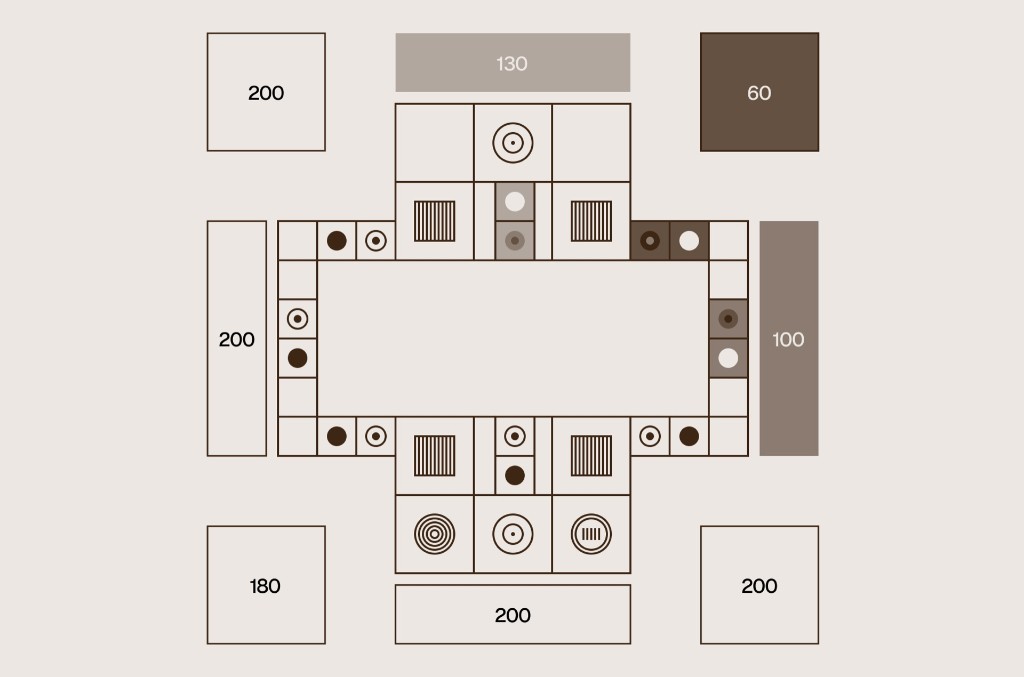
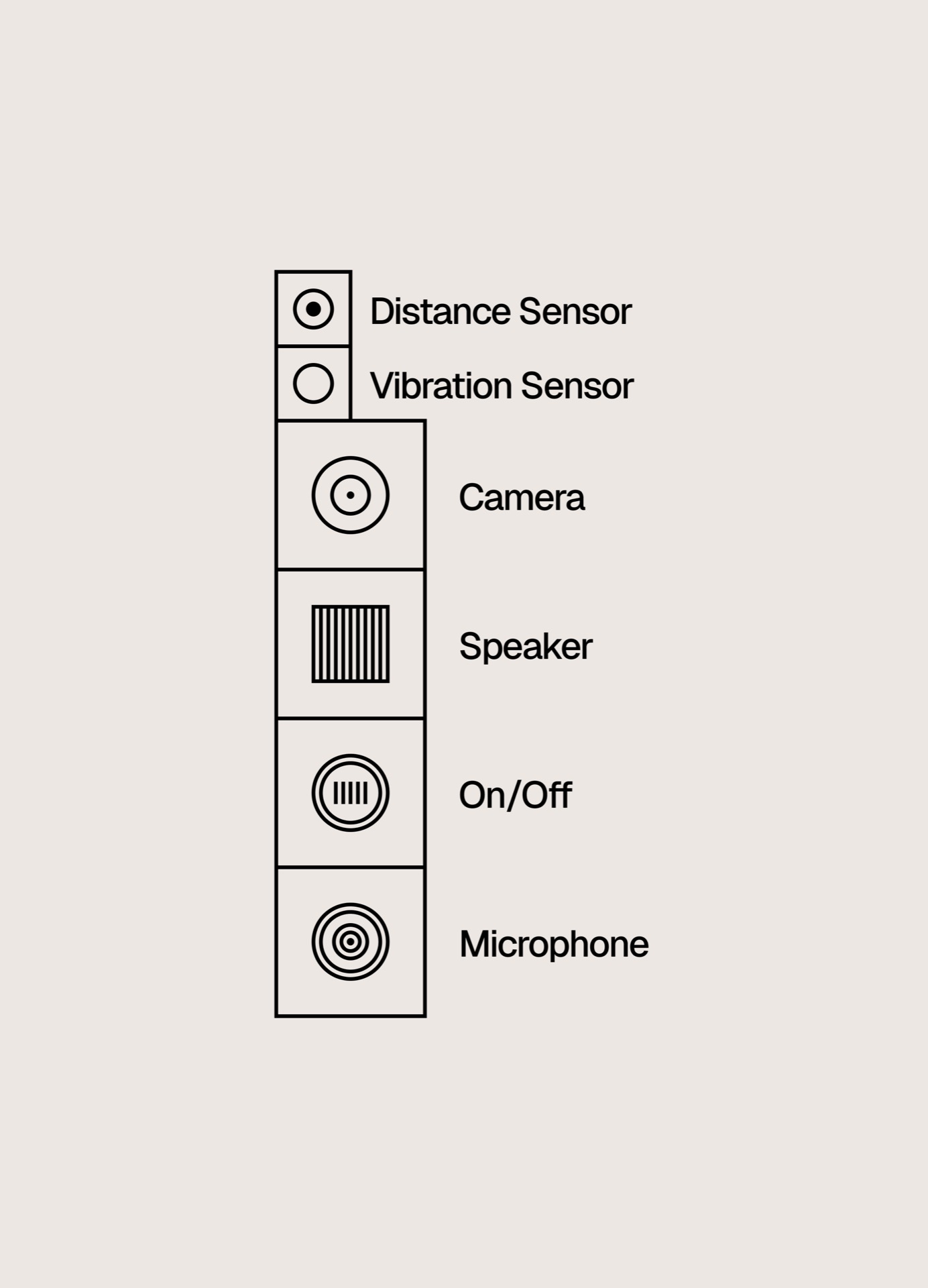
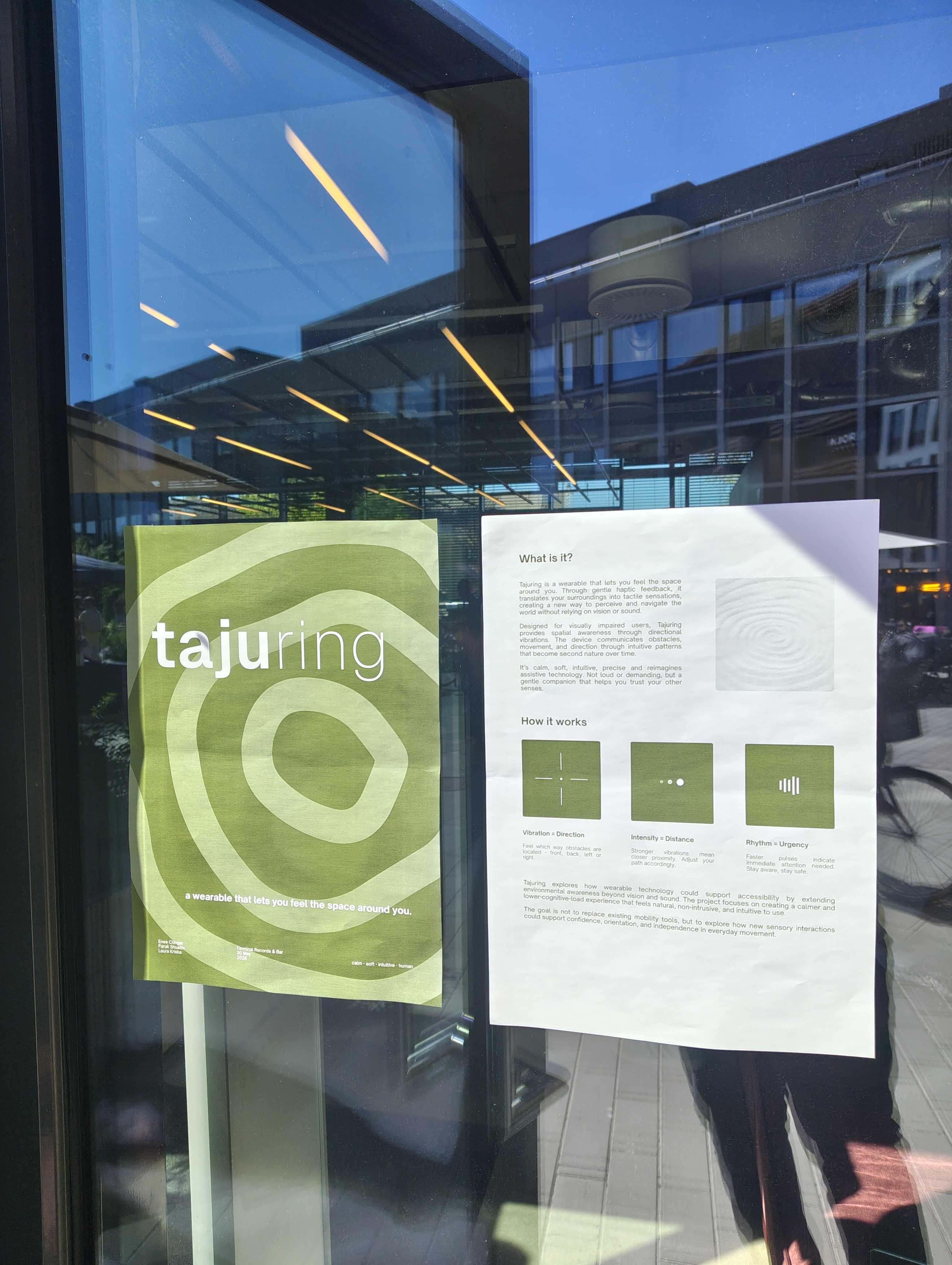
Tajuring is a wearable prototype we built at the Estonian Academy of Arts between March and May 2026. Cameras and distance sensors watch the space at chest and head height. Six small motors on the chest, back and shoulders turn it into vibration. Silence means the way is clear.
The gap above the cane
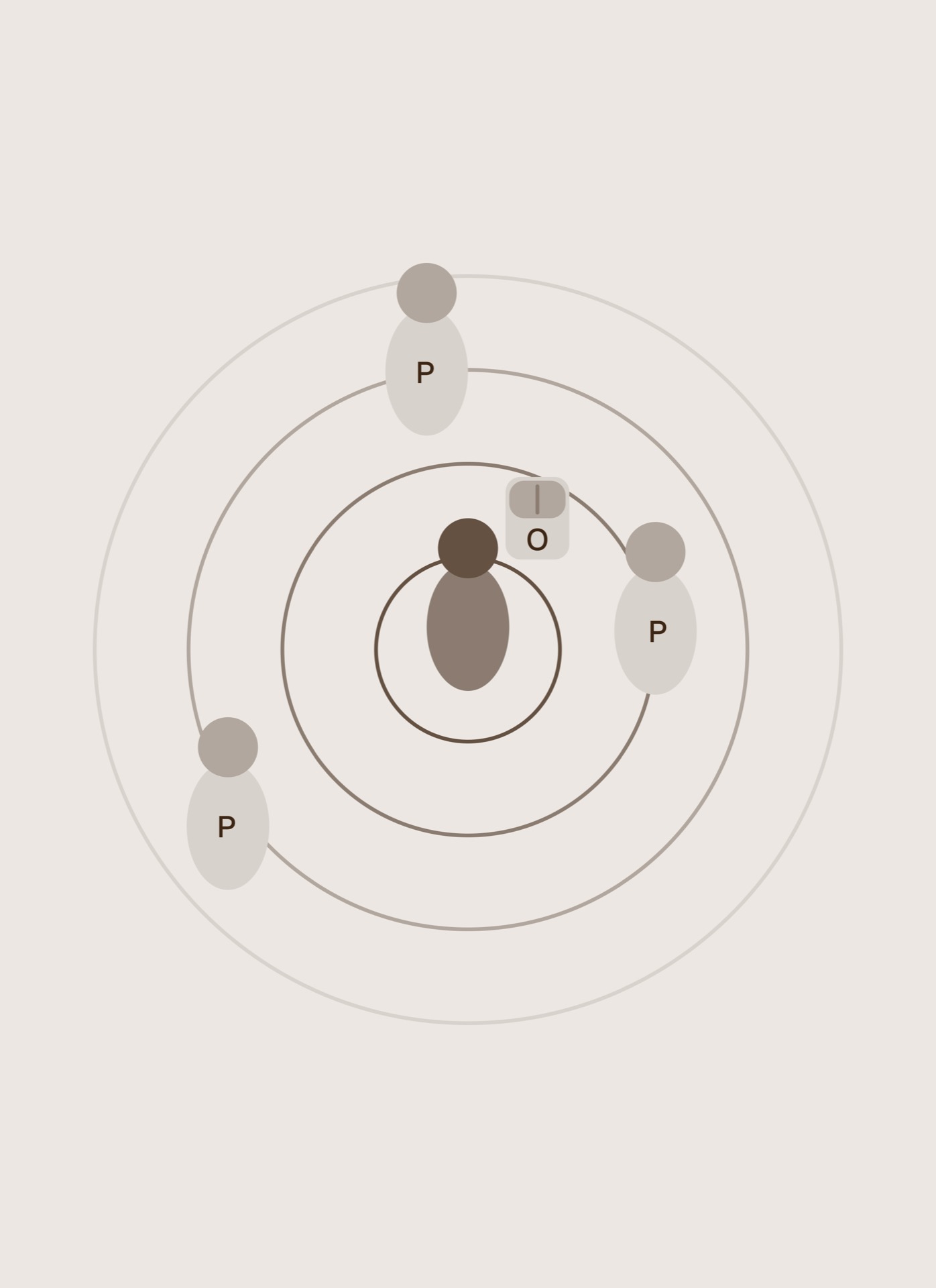
A white cane tells you what is on the ground. It cannot reach the sign at head height, the open truck door, or the person coming from behind. The tool is from the 1930s, and the gap has been there ever since.
- 54% Hit something at head height at least once a year
- 43% Change the way they walk for good afterwards
54% of cane users hit something at head height at least once a year, and 43% change the way they walk for good afterwards. Most newer aids answer with sound, which competes with the sense blind people rely on most.
So we gave ourselves one constraint: no sound, no screen. Space has to arrive as touch.
What we could learn, and what we could not
We tried to reach the blind community in Tallinn early. A contact offered to introduce us, but nobody had time in the first weeks, so we started from papers, podcasts and existing devices like BlindSight. What blind people wrote and said kept landing on one word: freedom. Walking alone, without a constant calculation running in your head.
Later we talked the concept through with a blind man. He liked it, described what his cane keeps missing, and said he would want something like it for diving, his hobby. That pointed to uses we had not thought about.
One conversation is not a study. Testing with blind people earlier, and more than once, is the first thing I would change.
Two walks with a blindfold
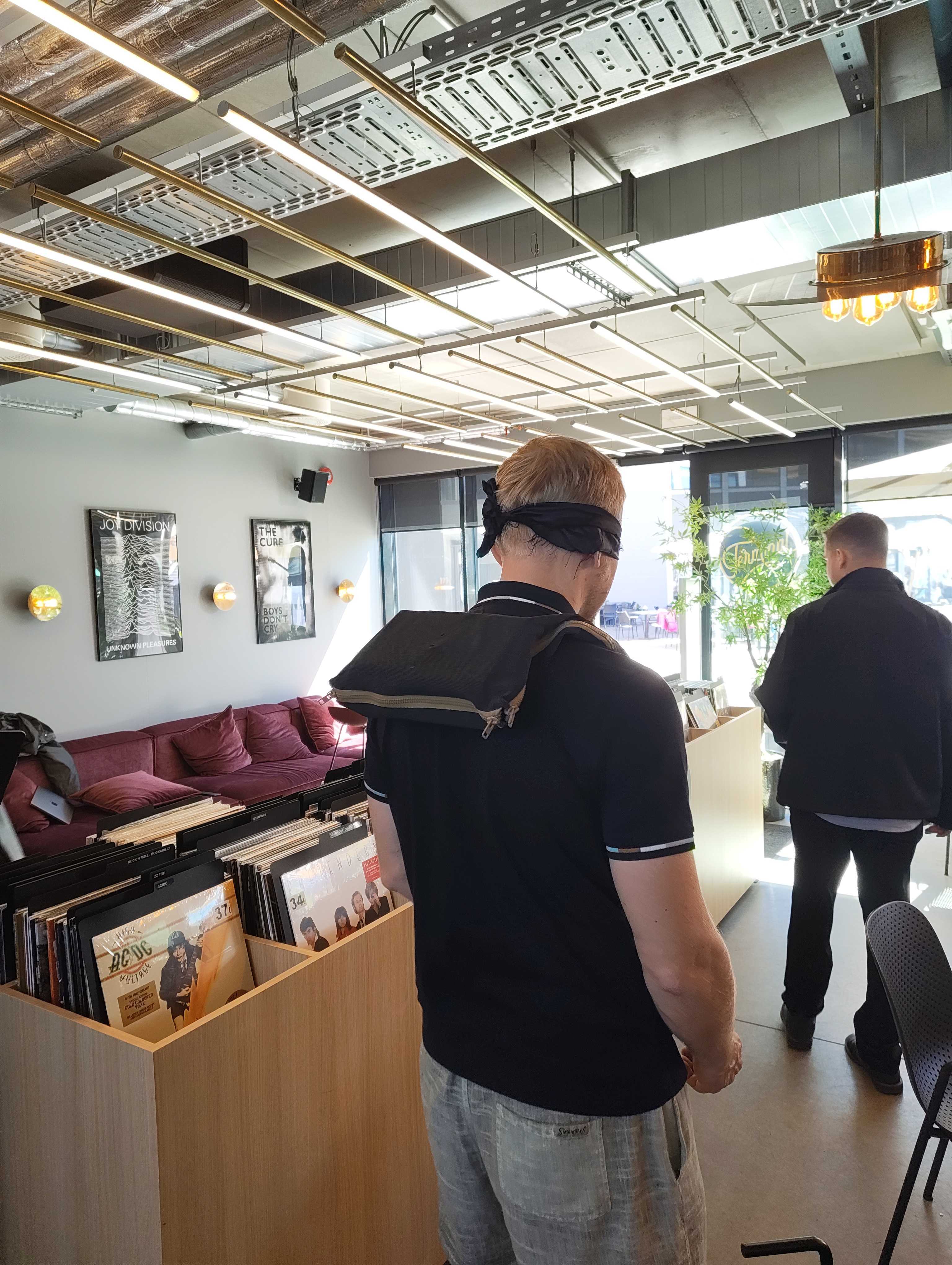
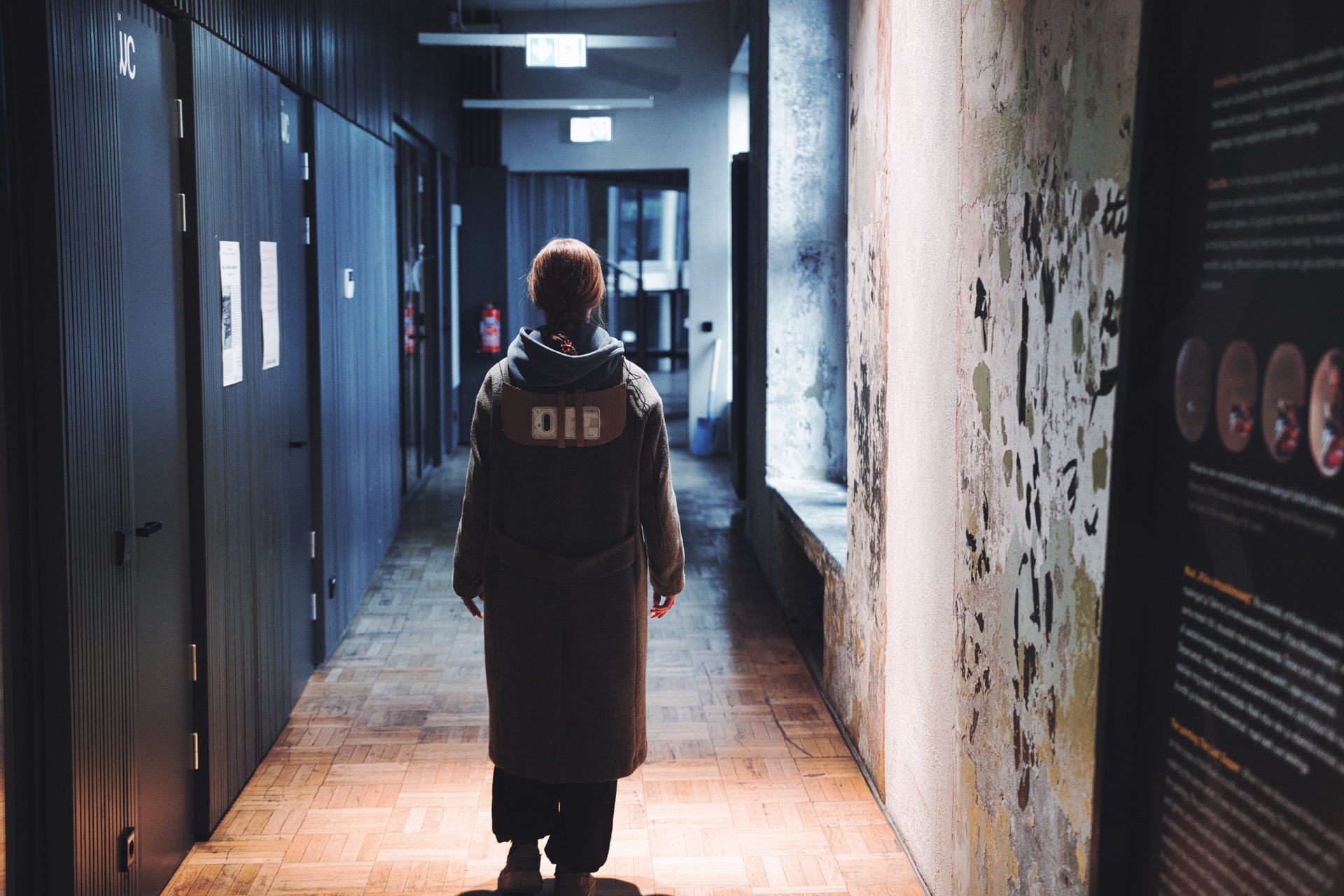
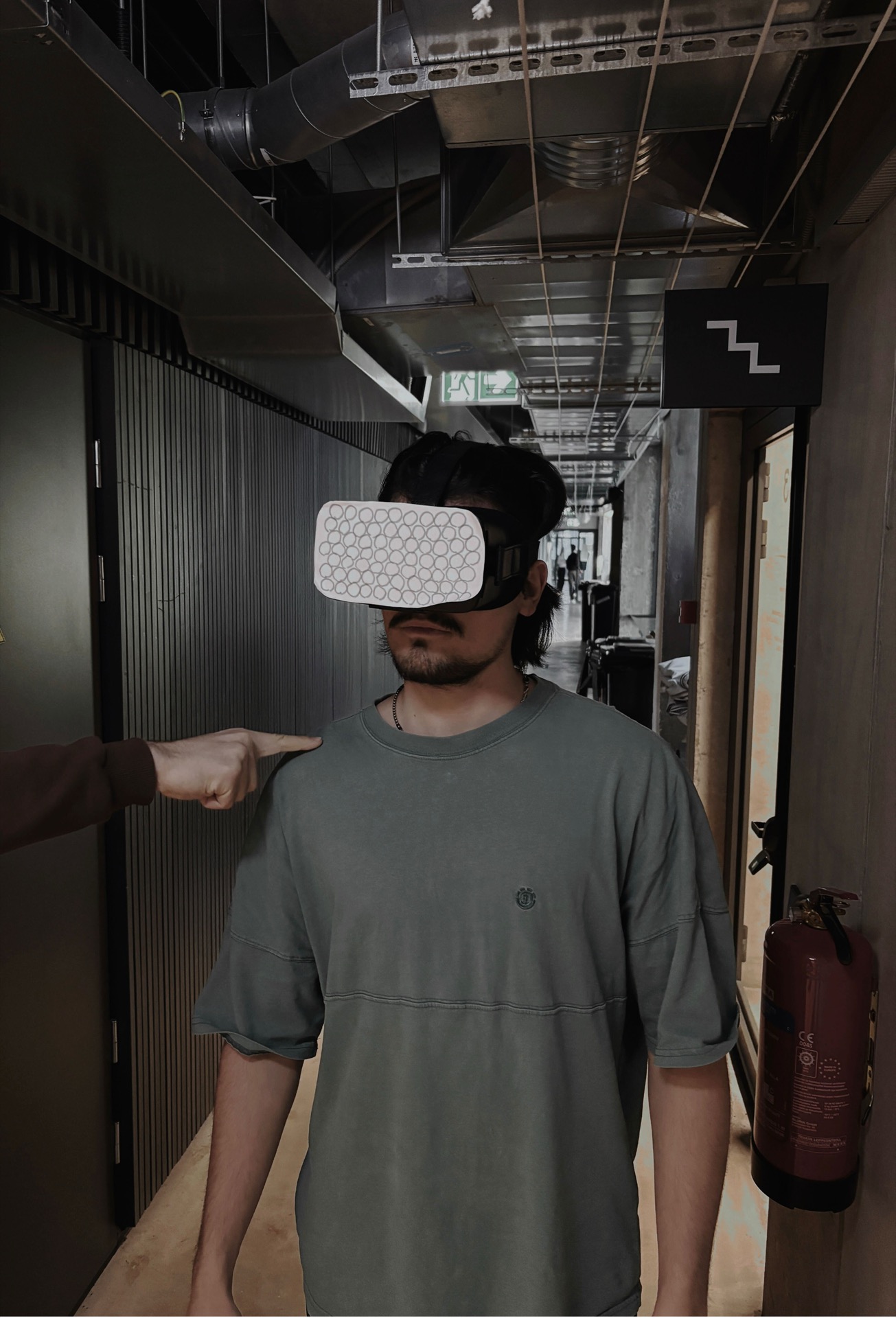
We picked two everyday routes: from home to a bus stop, and past a half-blocked sidewalk. Then we walked them ourselves, blindfolded and with a cane, and marked every point where the surroundings stopped giving a clear answer.
Both walks showed the same thing. The hard part is not one obstacle. It is that every step is a decision and the alertness never switches off. From the outside, none of that is visible.
Testing on our own bodies
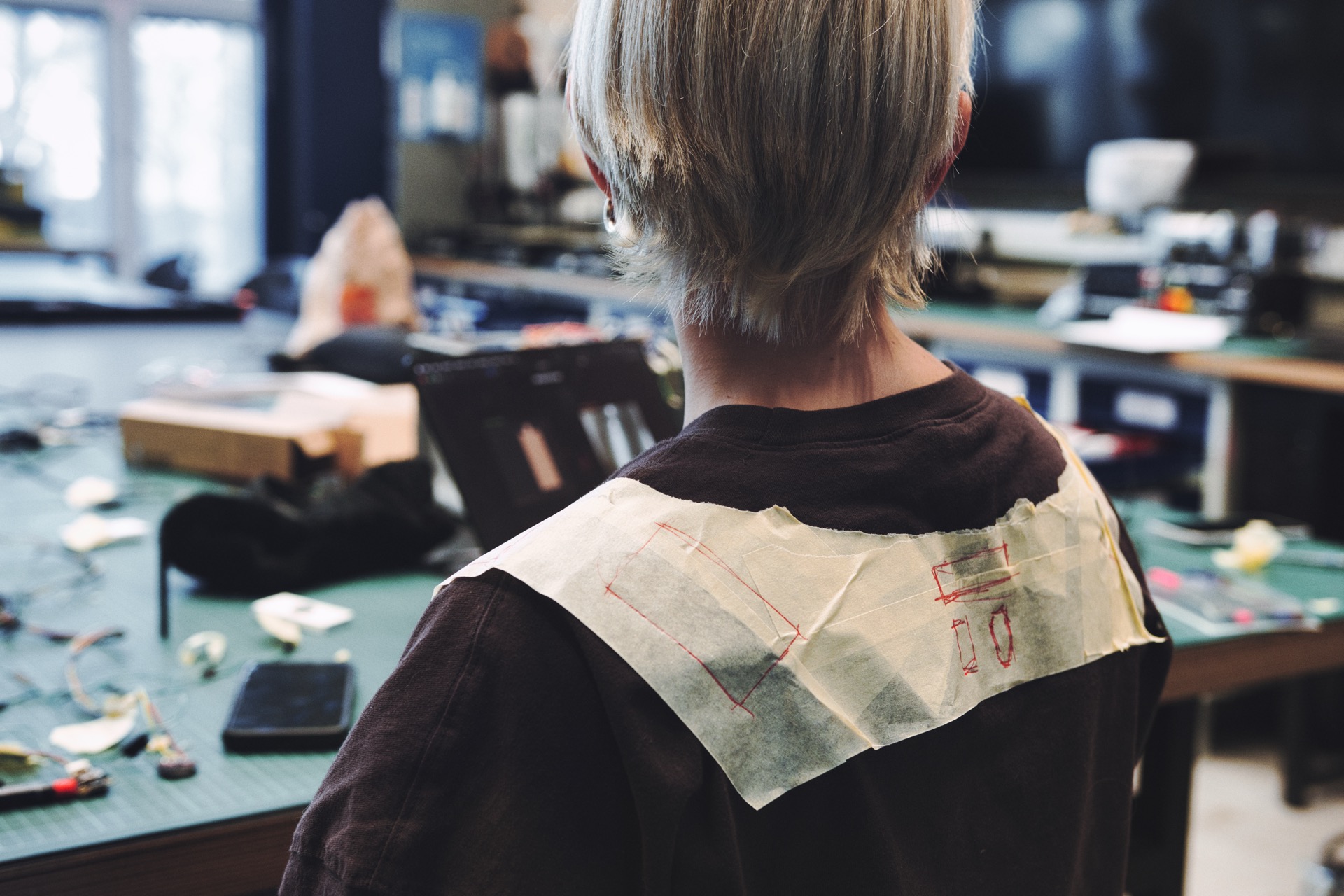
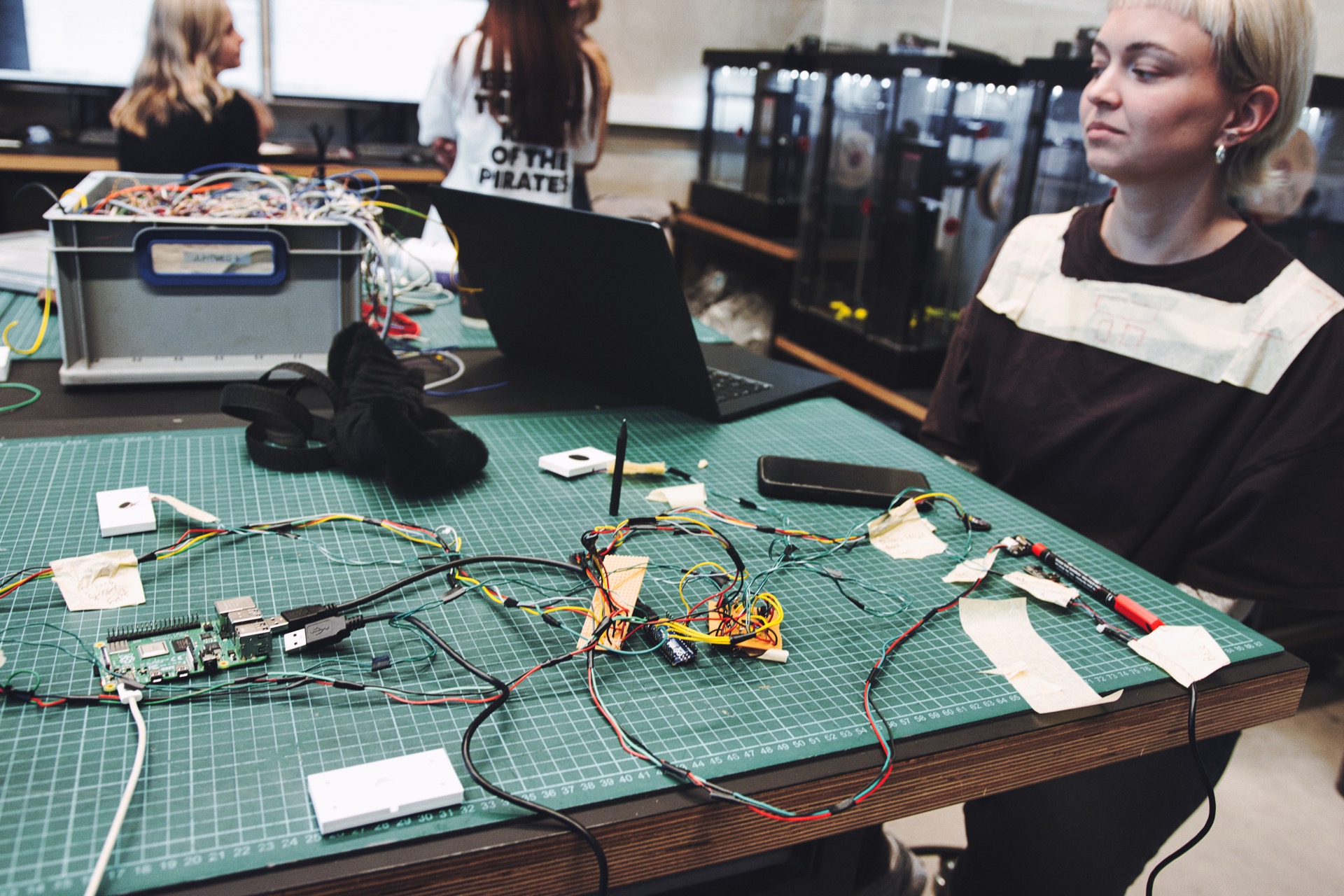
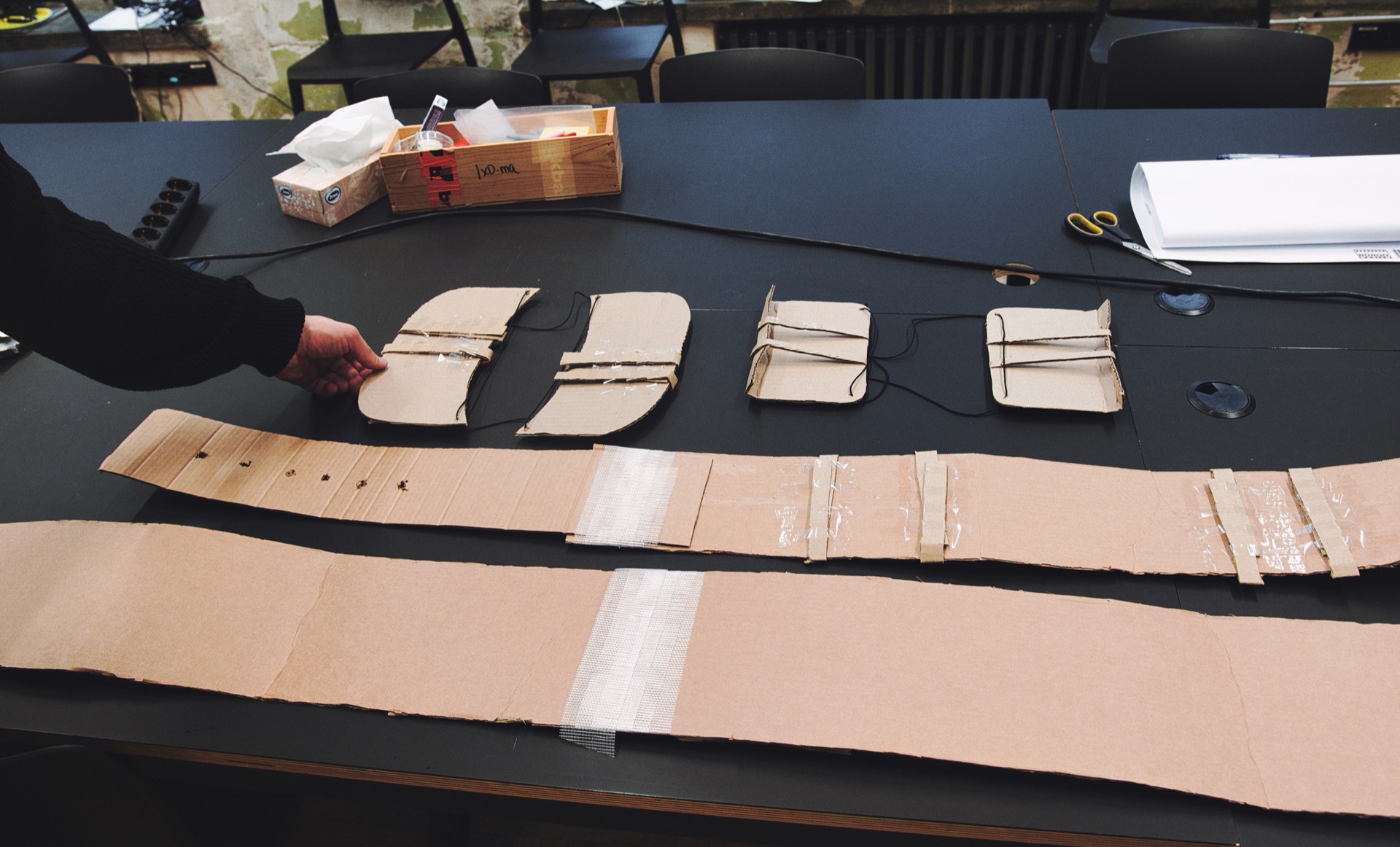
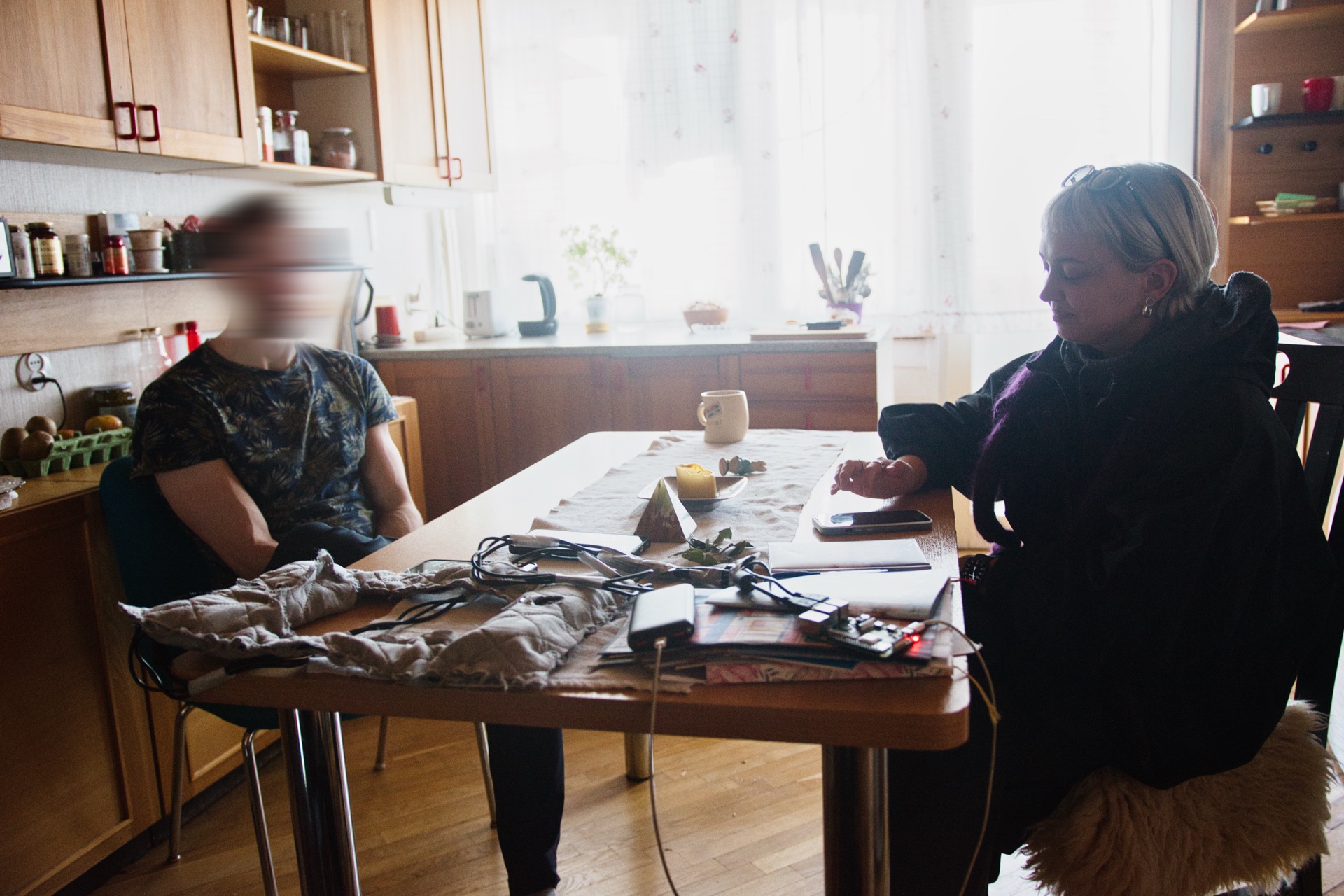
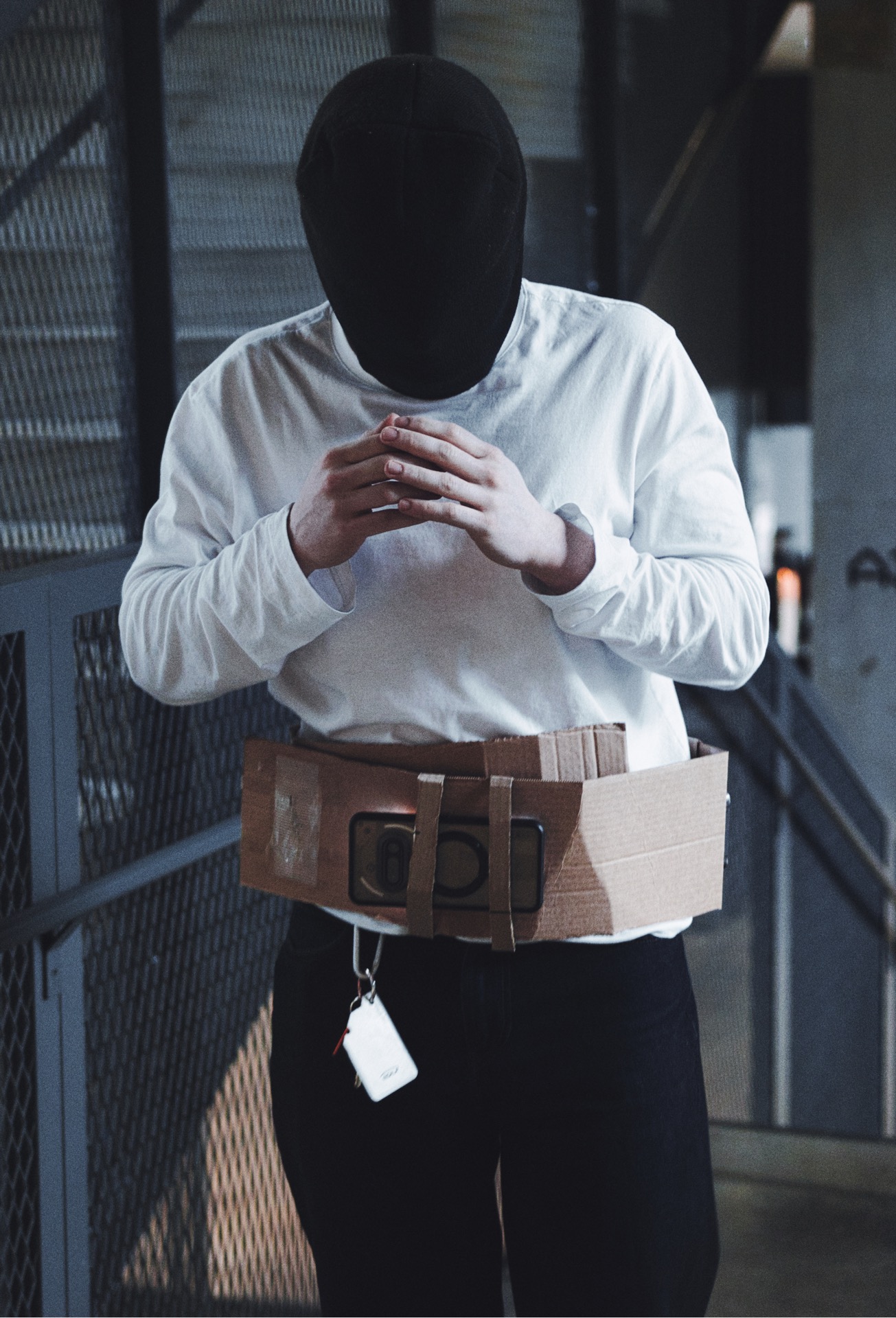
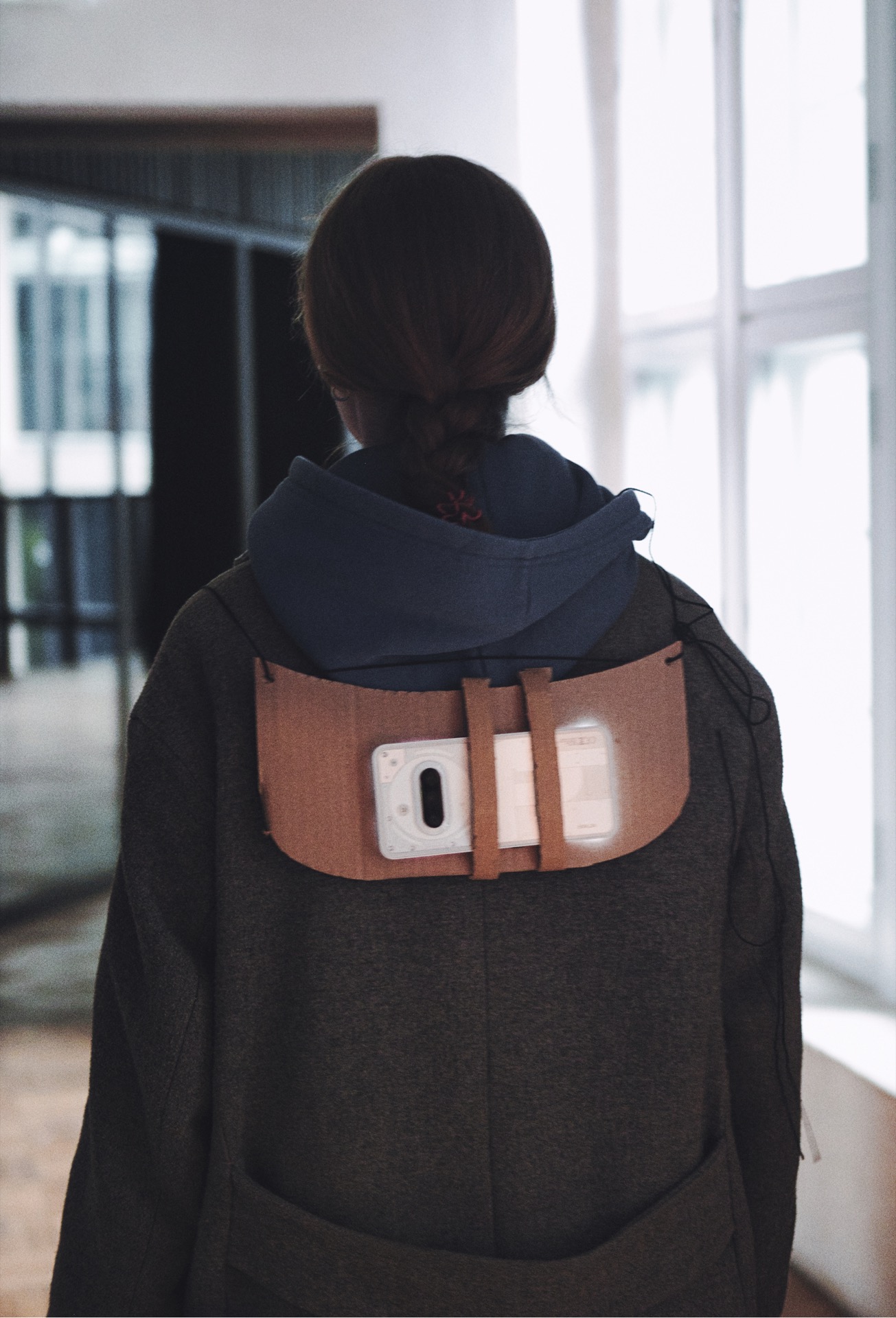
Before any electronics, we built four cardboard forms: a belt, a necklace, a shoulder strap and an insole. Then three tests.
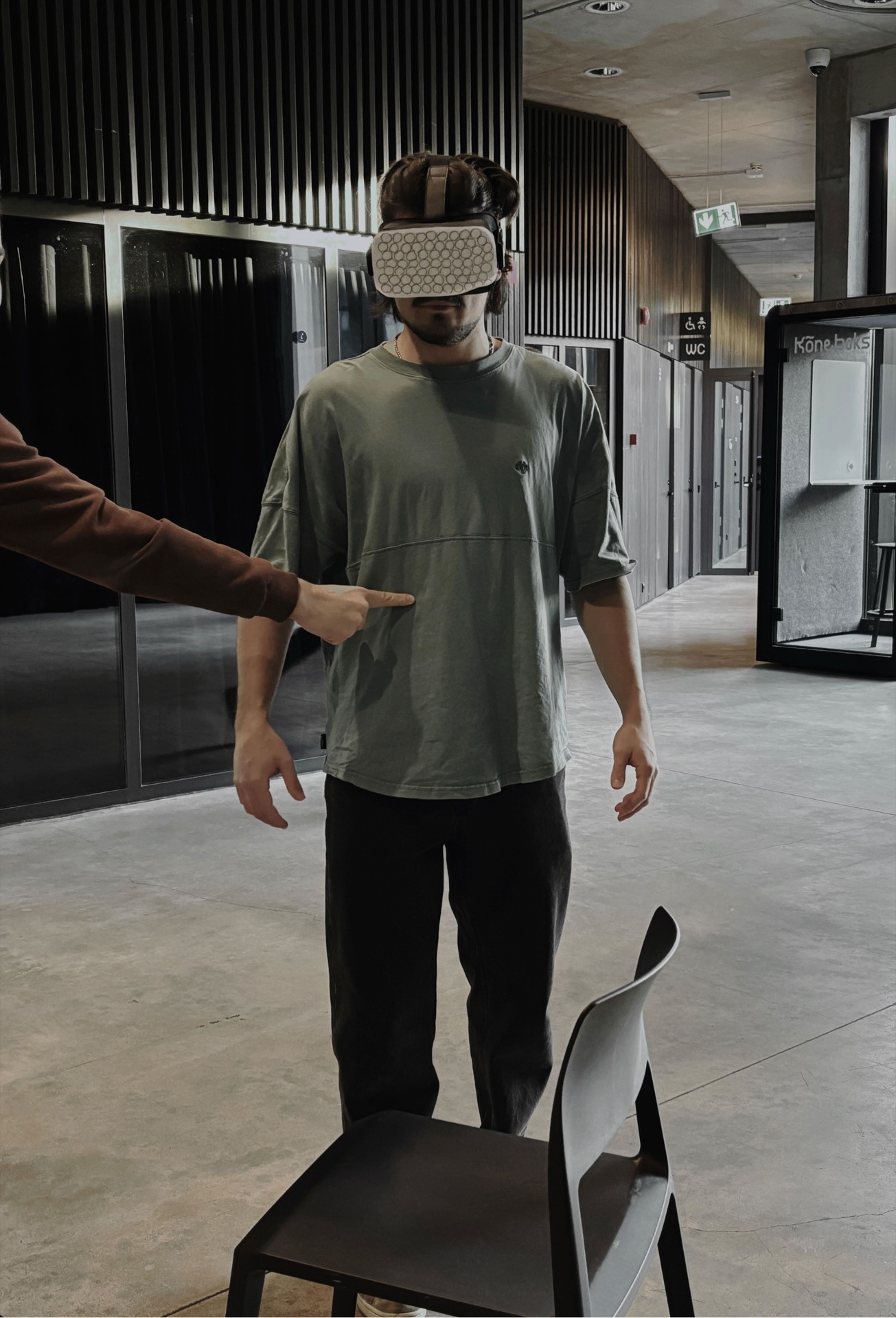
First, two Android phones on chest and back, vibrating on their own. Everything became a warning, and it caused more anxiety than orientation. Second, a Wizard of Oz test: one of us steered the vibration by hand while another walked blindfolded. Far less signal was enough, and silence was trusted as safe.
Third, just tapping. The waist is ticklish and every tap felt like a shock. Shoulders and neck could carry a signal for a long time without being annoying. That decided the form.
What we built
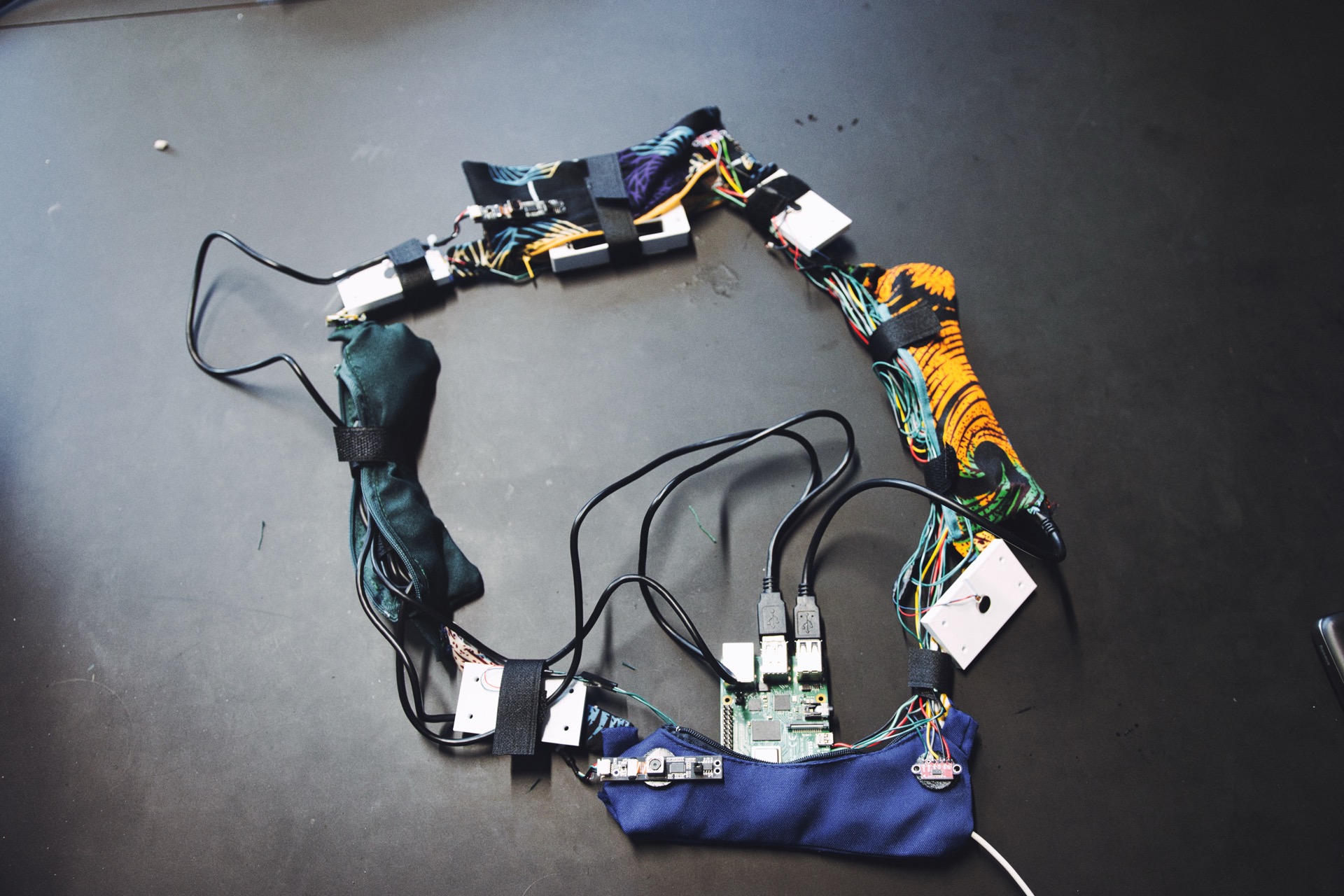
A necklace with motors at the chest, upper back and both shoulders, worn over a coat. Faux fur hides cables and makes it read as an accessory, not a medical device. Where it buzzes says the direction. How fast it pulses says how urgent. Silence means clear.
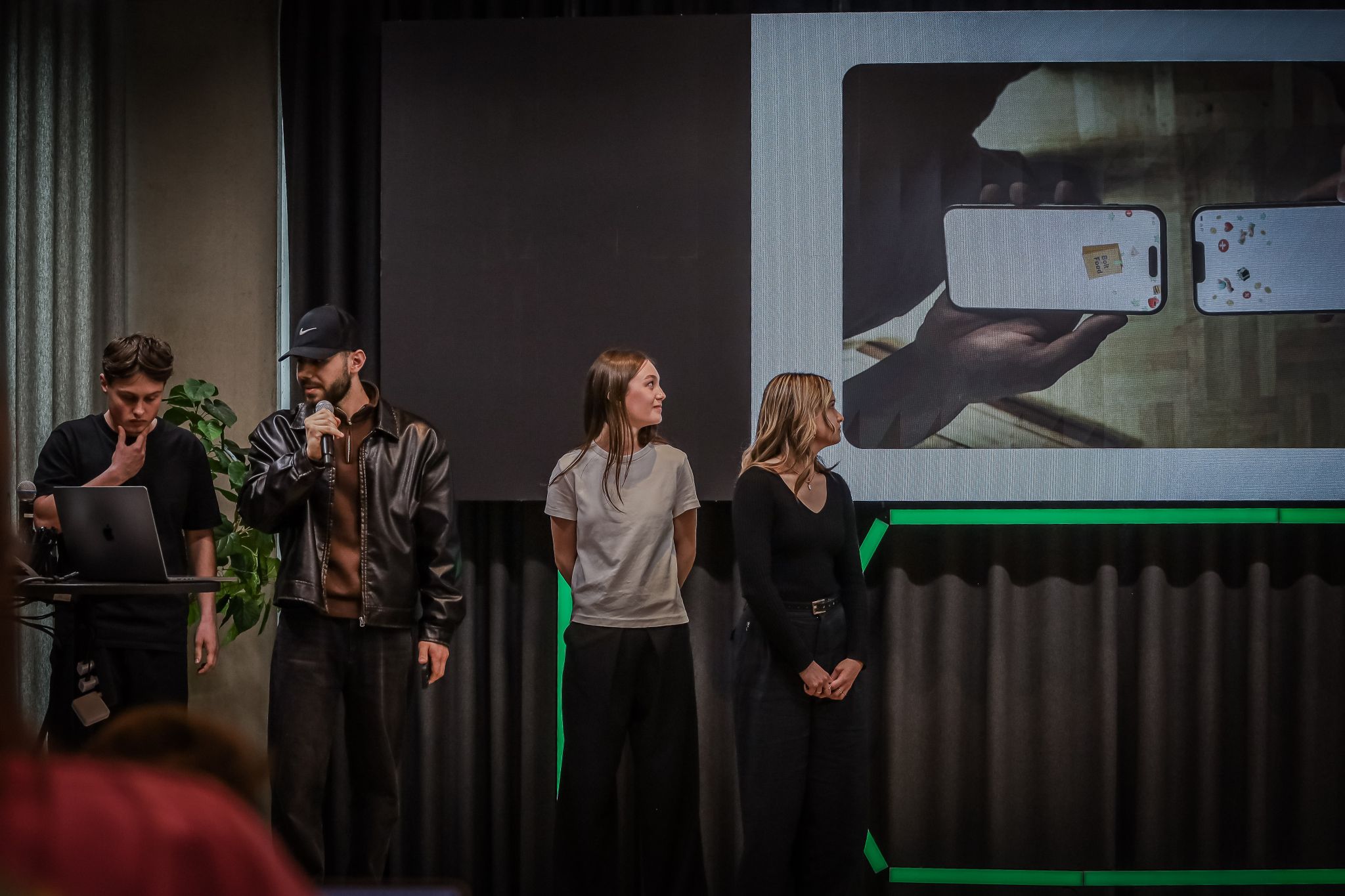
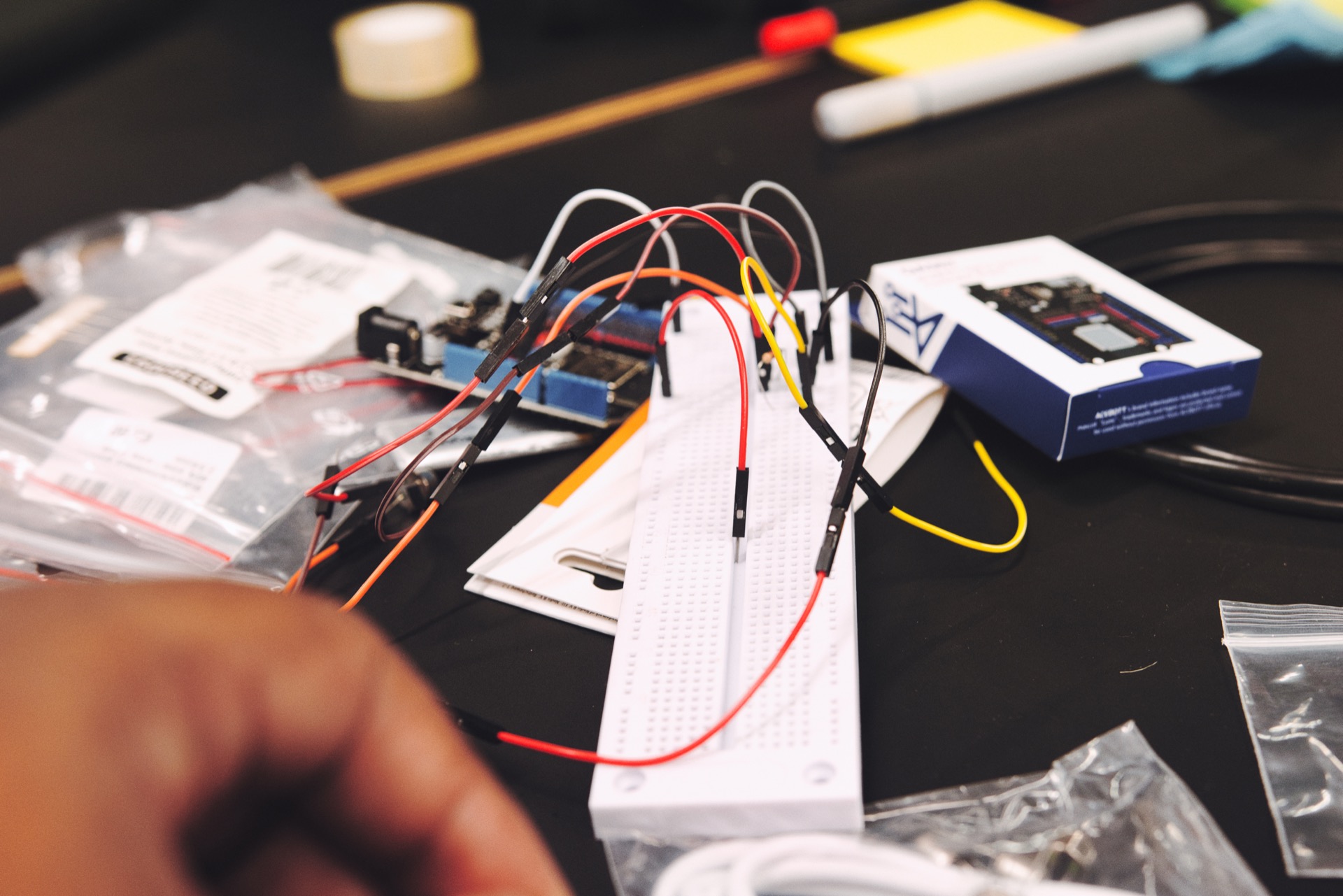
Inside, a Raspberry Pi runs object detection on two cameras, front and back, and an Arduino drives six motors so the rhythm stays steady even when detection is slow. At the exhibition on 30 May it ran live, with a manual mode as backup.
We planned four distance sensors and built two, so the sides are still blind. Whether silence alone is enough to trust that the device is on was never tested with blind users.
A necklace that feels what a white cane cannot reach
Tajuring is a wearable prototype we built at the Estonian Academy of Arts between March and May 2026. Cameras and distance sensors watch the space at chest and head height. Six small motors on the chest, back and shoulders turn it into vibration. Silence means the way is clear.
The gap above the cane
A white cane reads the ground. It misses the sign at head height and the person behind you. 54% of cane users hit something at head height at least once a year, and 43% change the way they walk for good afterwards. Most newer aids answer with sound, which blocks the sense blind people rely on most.
- 54% Hit something at head height at least once a year
- 43% Change the way they walk for good afterwards
Our constraint: no sound, no screen. Space has to arrive as touch.
What we could learn, and what we could not
Reaching the blind community took longer than planned, so we started from papers, podcasts and existing devices. Later we talked the concept through with a blind man. He liked it, described what his cane misses, and wanted it for diving.
One conversation is not a study. Testing with blind people earlier is the first thing I would change.
Two walks with a blindfold
We walked two everyday routes blindfolded with a cane and marked every point where the surroundings stopped giving a clear answer. The obstacles were not the hard part. The alertness that never switches off was.
Testing on our own bodies
Four cardboard forms, three tests. Automatic vibration made everything feel like danger. Steering it by hand showed that far less signal is enough. Tapping showed the waist startles, while shoulders and neck stay calm. That decided the form.
What we built
Motors at the chest, back and shoulders, over the coat, in faux fur so it looks like an accessory. Direction is where it buzzes, urgency is how fast. A Raspberry Pi and an Arduino ran it live at the exhibition. The sides are still blind: we built two of four planned distance sensors.