Designing the last fifteen seconds of a Bolt delivery
A service concept for Bolt Food, made by four students at the Estonian Academy of Arts. Bolt asked us to make the handoff at the door feel more human. Our research said that neither couriers nor customers wanted that, so we designed a close that is reliable first and a little more human second.
A brief nobody at the door asked for
Bolt can show a courier crossing the city in real time. The moment the bag changes hands has no design at all. The brief from Bolt: turn this purely transactional handoff into a moment people remember.
We mapped what each side wants. Bolt wants loyalty and a reason to pick it over the next delivery app. Couriers want speed, because more orders mean more pay. Customers want a door that works the same way every time.
Couriers and customers both assume that a more human handoff costs time. That put the brief in conflict with the two people who would have to live with it.
What the doorstep is really like
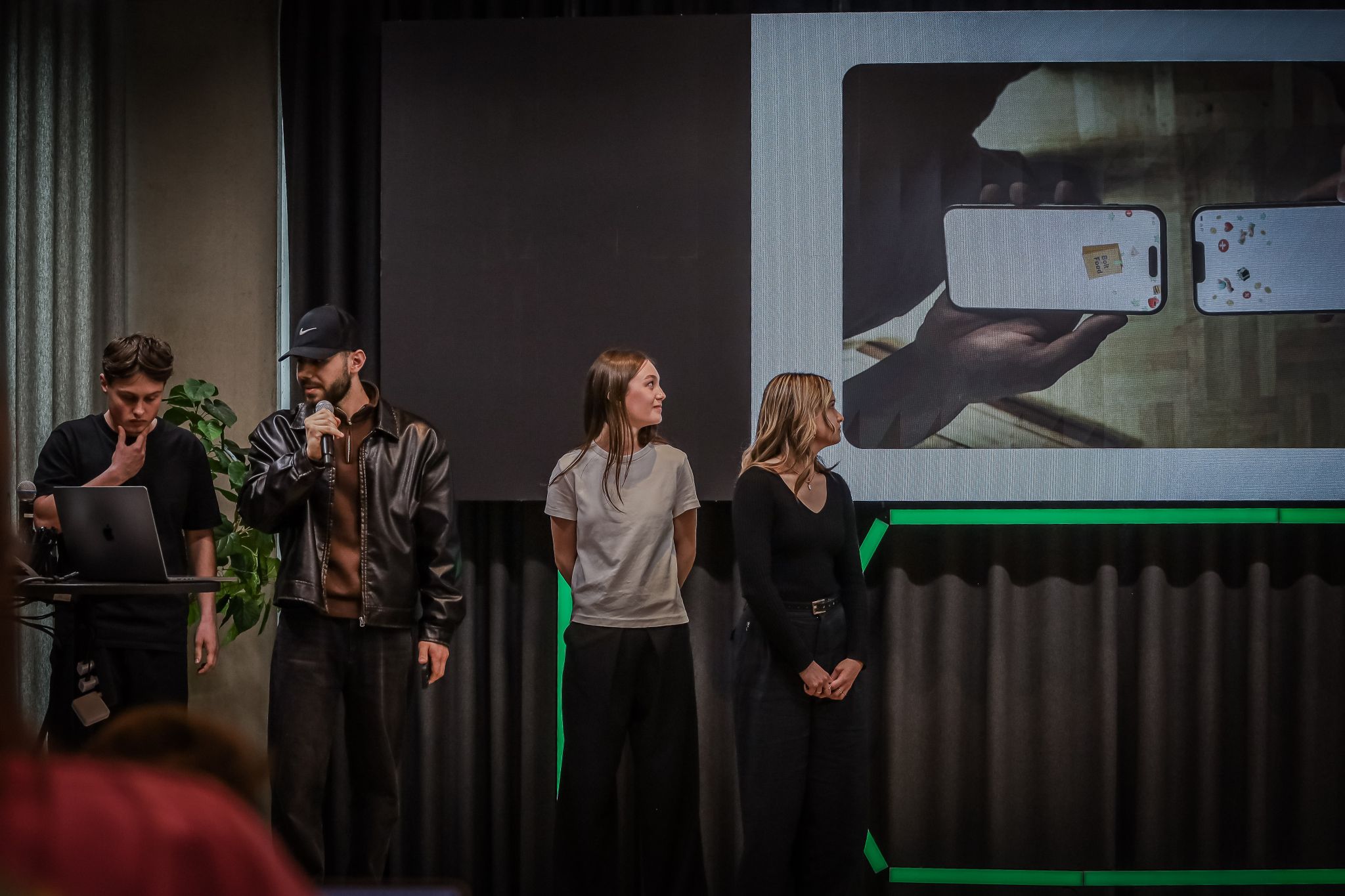
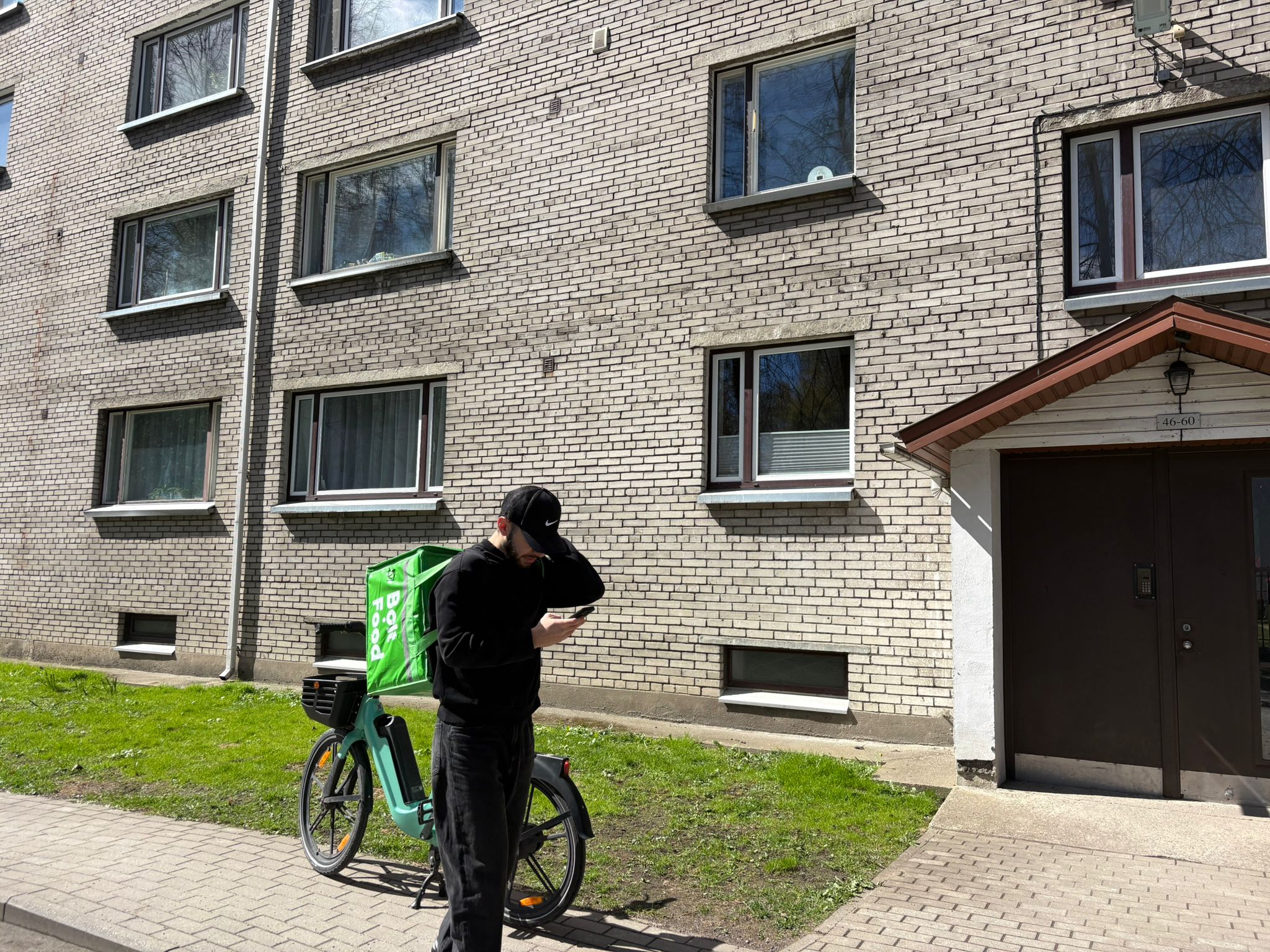
We surveyed 35 Bolt customers in Tallinn, talked to two couriers, shadowed deliveries and delivered a few orders ourselves.
- 62% Say the interaction is not important
- 54% Still thank the courier when they meet
- 58% Name a late order as their main concern
The couriers put it plainly: there is nothing to talk about, and the bike is waiting on the street.
One customer had been called five times by a courier although she chose leave at door. She felt followed. What fails at the door is rarely warmth. It is not knowing what the other person will do next.
Where the project turned
So we made the handoff reliable first and a little more human second. Our tutor Taavi Aher had us add one clause to the brief that shaped every decision after it: while remaining as efficient as possible.
Find each other first
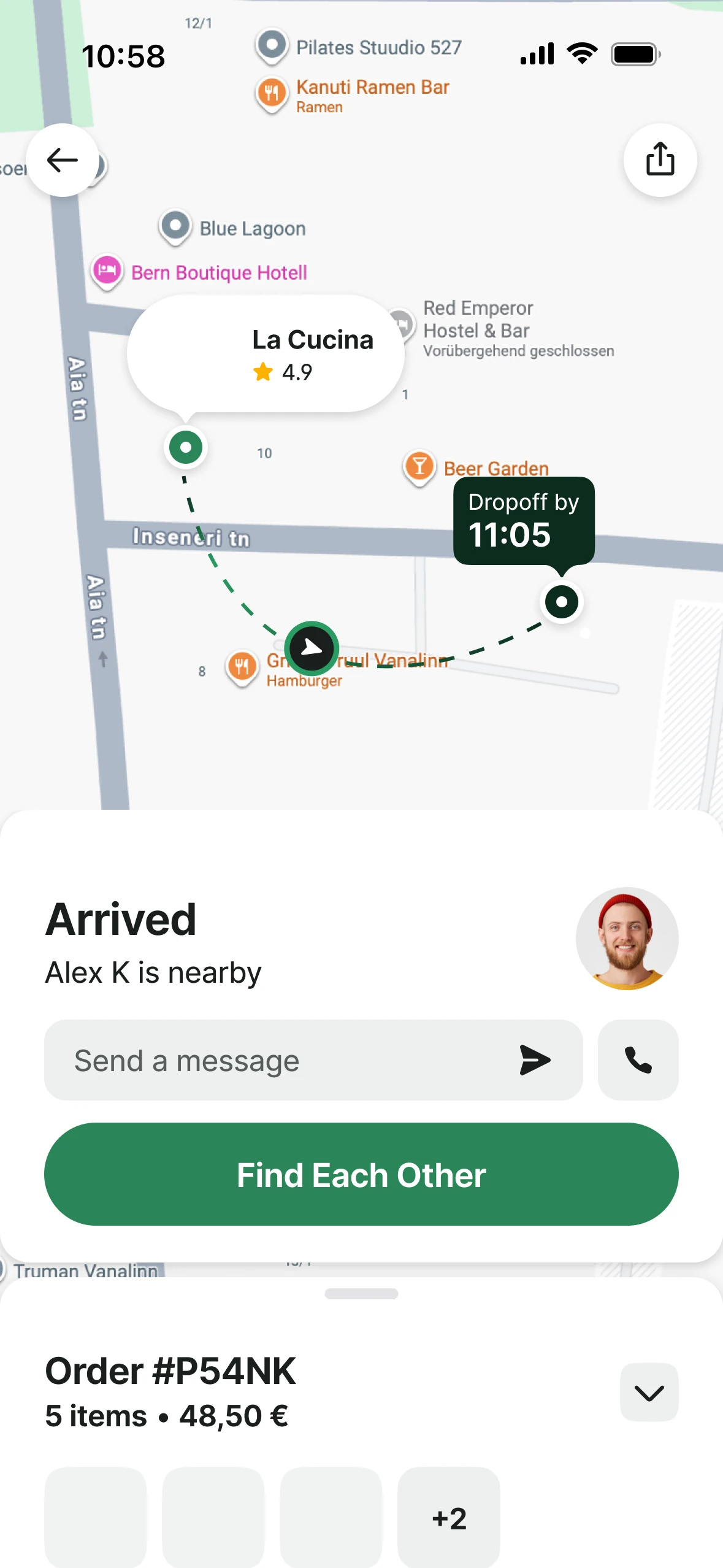
Couriers lose the most time in courtyards, at identical doors and in stairwells, exactly where GPS stops being useful. Customers wait on the pavement and cannot see that the courier is still looking for a place to park.
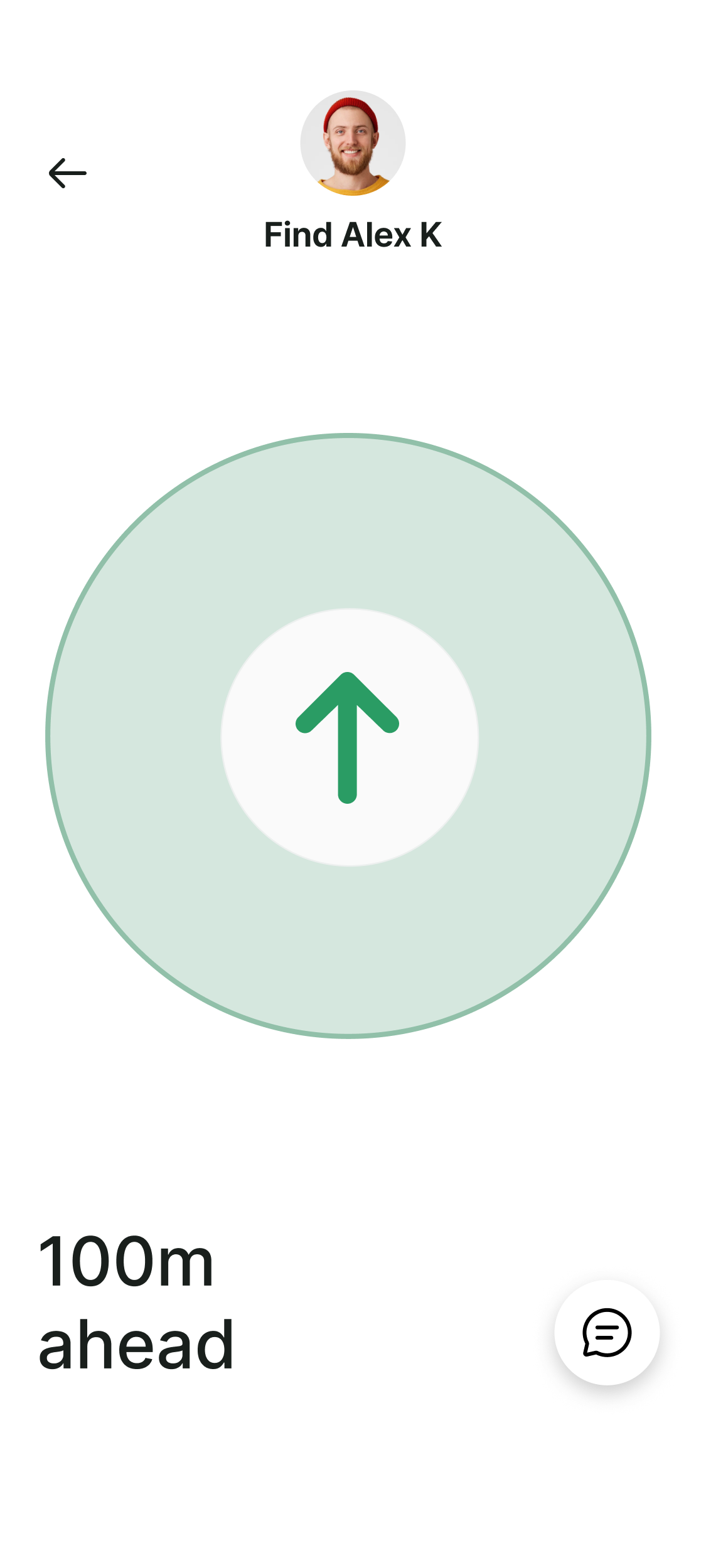
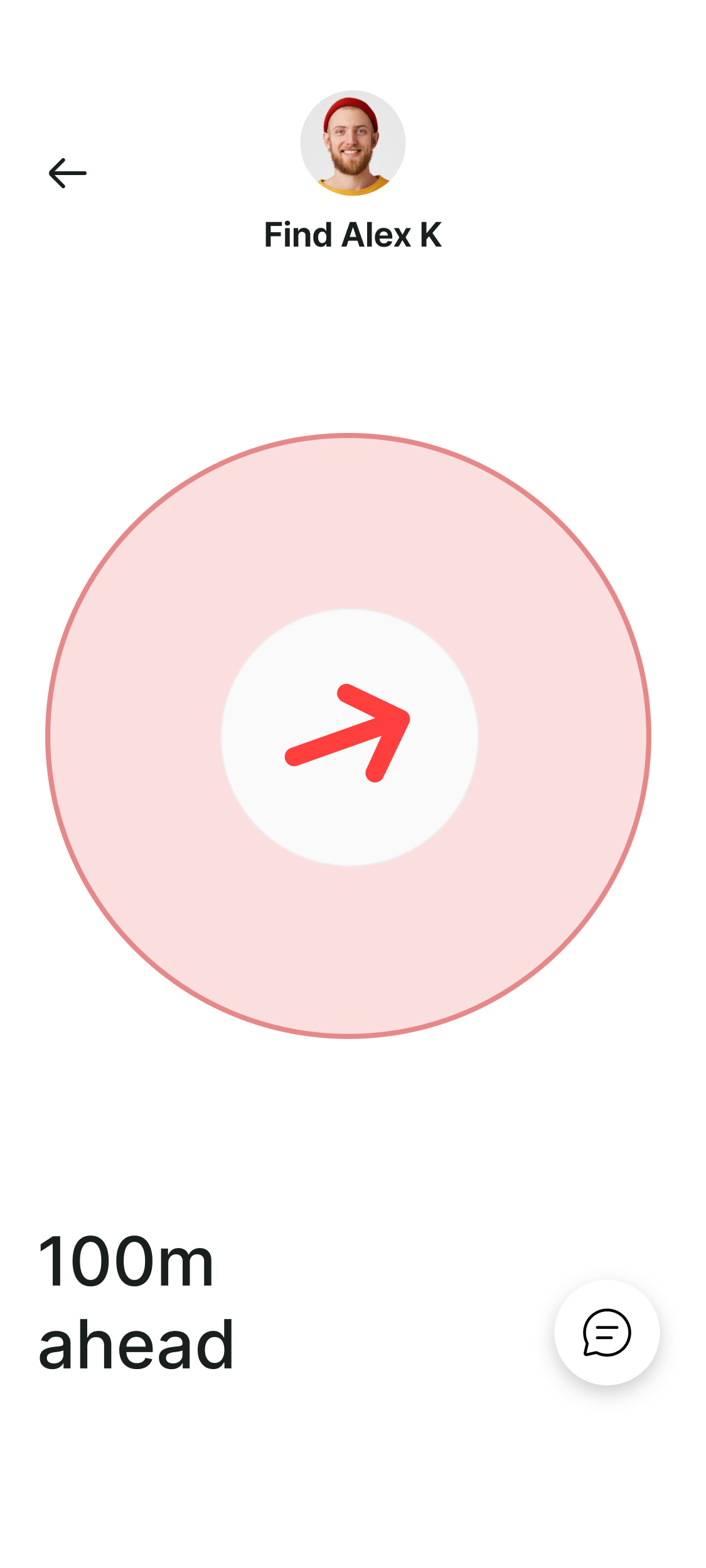
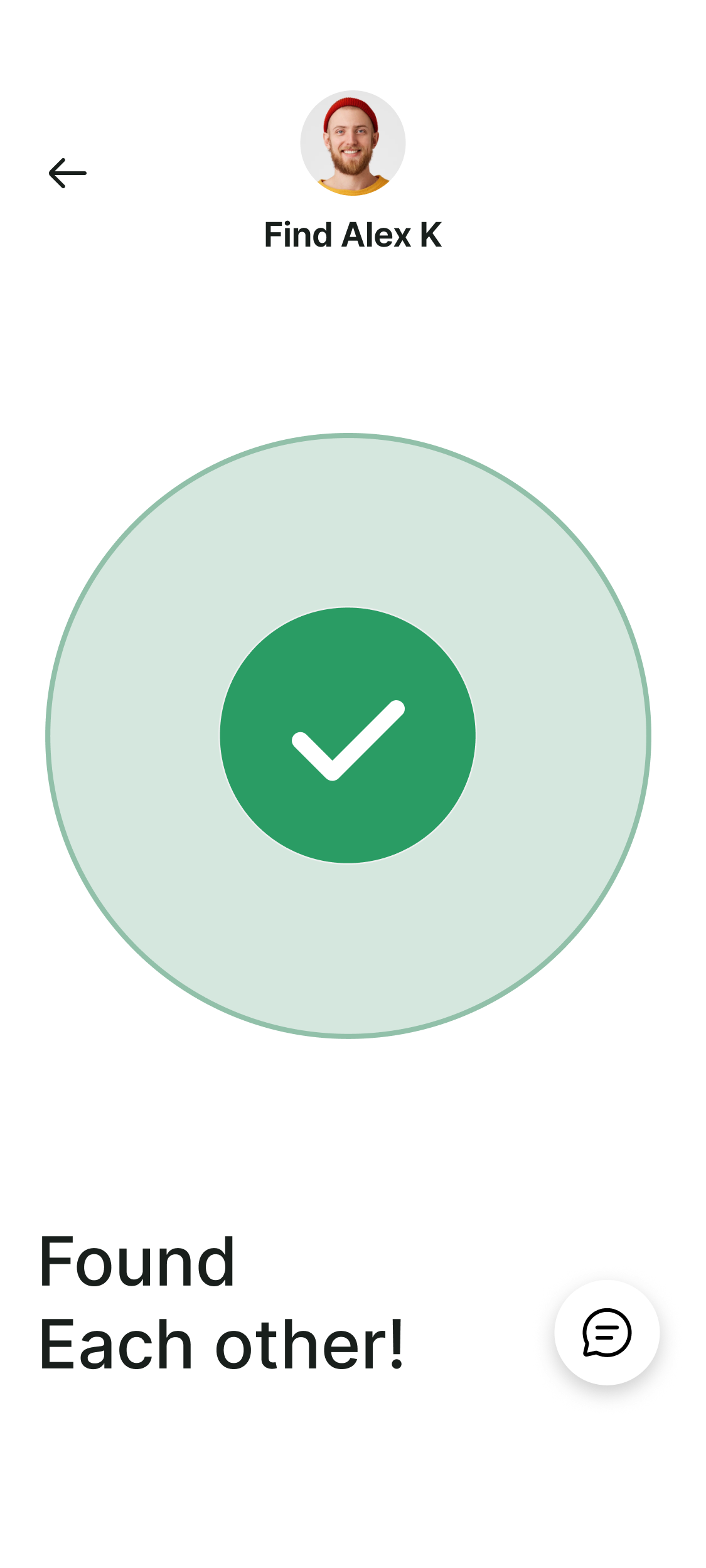
Find Each Other works like Find My. For the last meters, both phones point toward each other. It is optional, runs next to the map, and leads straight into the handshake. In testing it was the feature people wanted most, including the tester who turned down everything else.
A close both sides confirm
At the door, courier and customer hold their phones together and the order closes for both at once. It needs no shared language, and because the customer has to confirm, a courier cannot quietly skip a drop-off instruction.
Bolt gave us a clear benchmark: the PIN they already use. If the handshake is not faster or clearer than reading out four digits, it has no reason to exist. That is also why it only appears for Meet at my door and Meet outside. Leave at door stays contactless.
What we dropped on the way: a branded goodbye, which falls apart with accents and tired people, pre-written chat messages, speed rankings for couriers, and a 3D map of the building.
A reason to stop, in second place
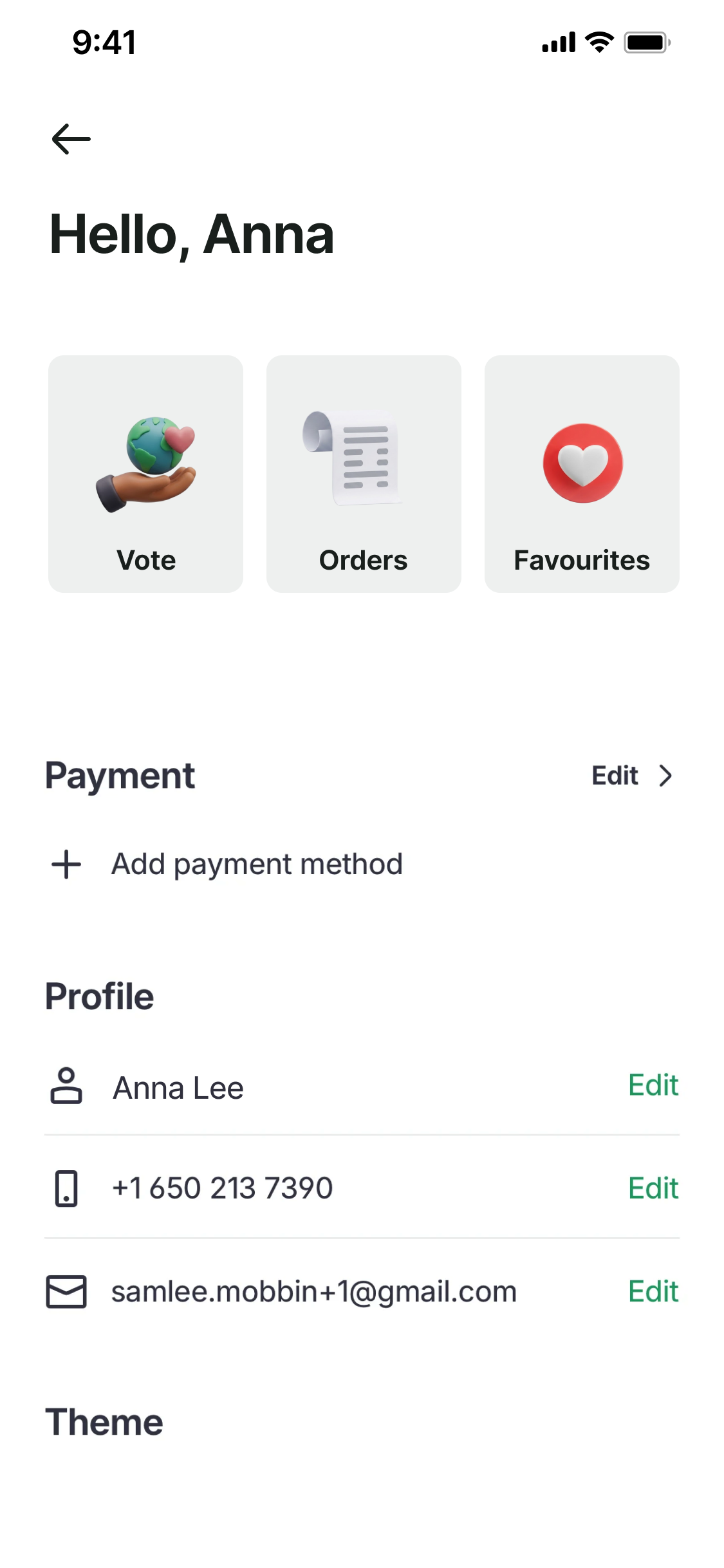
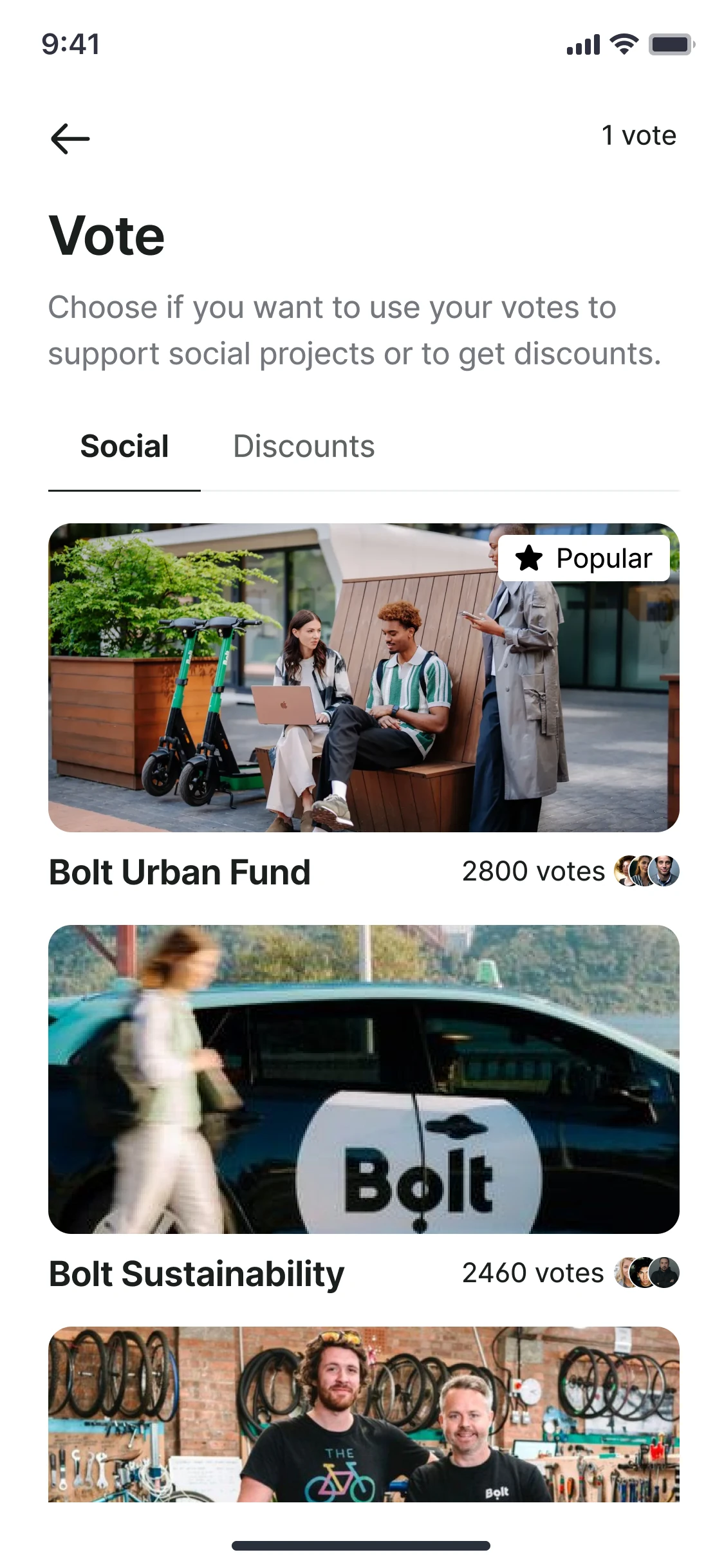
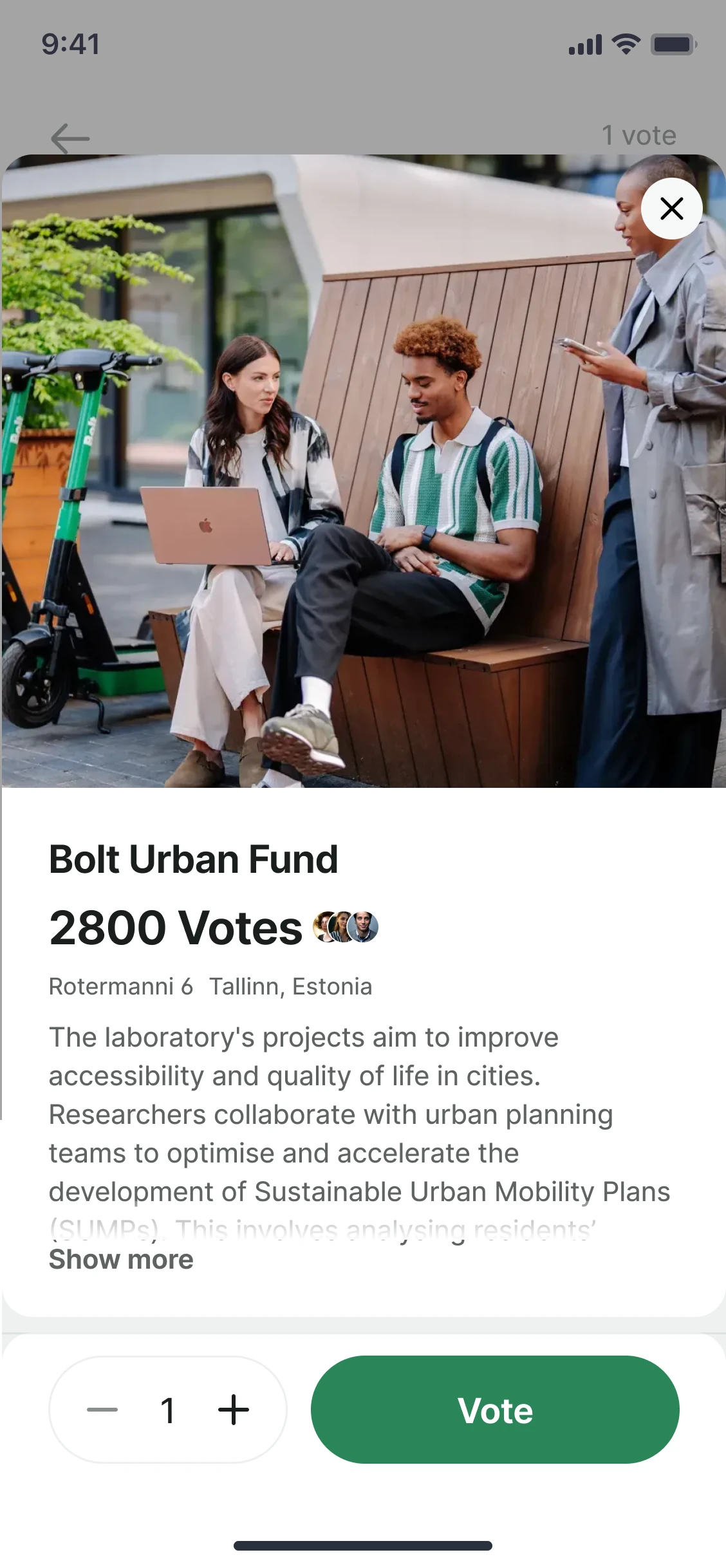
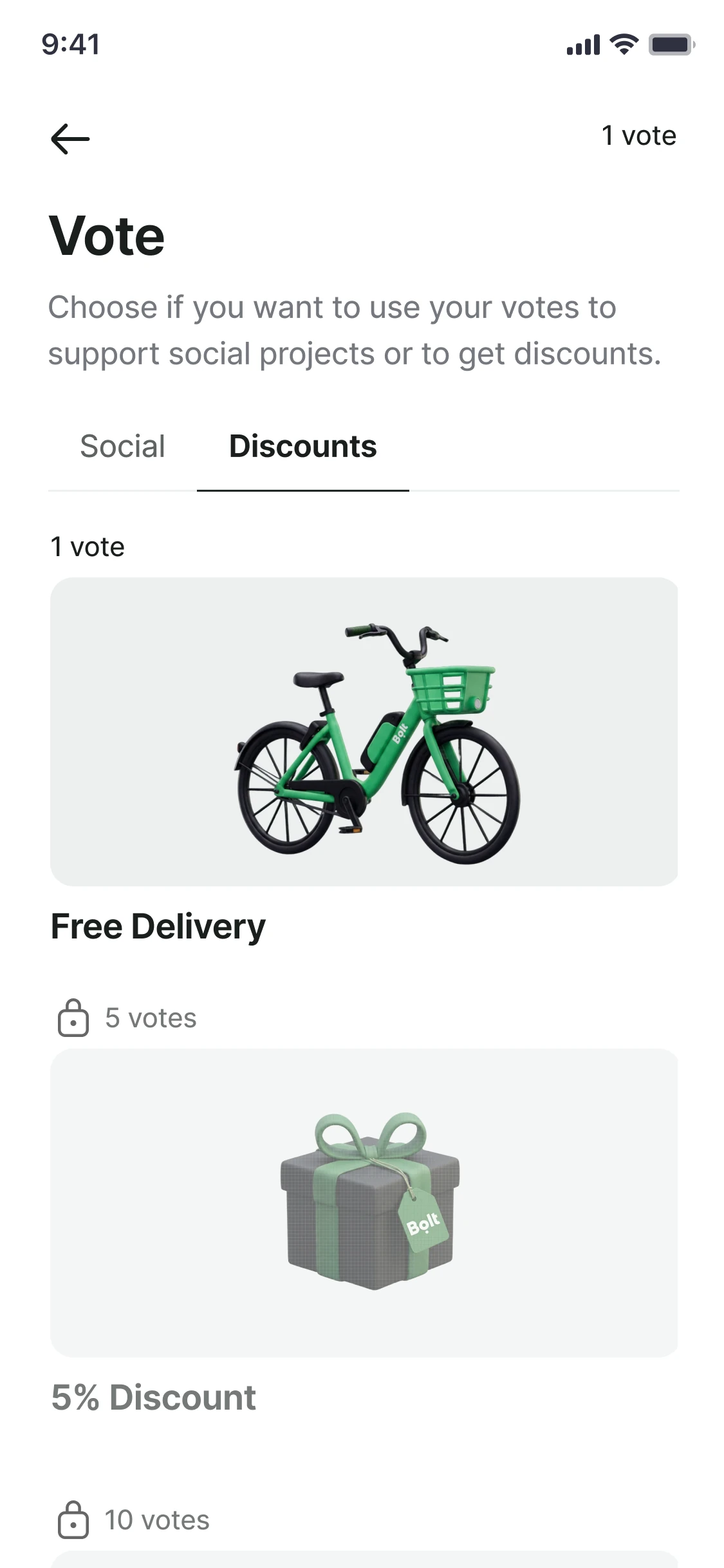
Without a reason, dropping the bag and walking away is always faster. So a completed handshake gives the courier a tip or a bonus, and the customer a vote. Votes go to a local project in the Bolt Urban Fund or turn into a small discount. The thought was that a playground up the street could go up because your vote helped tip it — something nearby you had a hand in.
Our first version led with this reward. Bolt pushed back in the final review: if the handshake only works because of the incentive, it does not work. Their incentive team owns that topic anyway. We moved the reward into a supporting role and presented the handshake on its own.
What testing showed
We showed the prototype to two customers. Find Each Other worked for both. The handshake felt clear, but one of them never picks Meet at my door because couriers always seem rushed, and she would feel bad holding one up. Neither cared about votes or discounts, and one phone was too old to run the order smoothly.
Two people is not validation. The next step would have been role-play with working couriers under real time pressure, plus the cases the concept still skips: an empty battery, rain, no shared language, or one side simply refusing.
What I would do differently
Taavi’s main critique was that we committed to the handshake early because it felt right, then stayed on the safe side. He was right. Next time I want to stay longer with the ideas that make me uncomfortable before I defend the one I like.
Designing the last fifteen seconds of a Bolt delivery
A service concept for Bolt Food, made by four students at the Estonian Academy of Arts. Bolt asked us to make the handoff at the door feel more human. Our research said that neither couriers nor customers wanted that, so we designed a close that is reliable first and a little more human second.
A brief nobody at the door asked for
Bolt asked us to turn the handoff at the door into a moment people remember. Right now it has no design at all.
Bolt wants loyalty. Couriers want speed, because more orders mean more pay. Customers want a door that works the same way every time. Both of them assume a more human handoff costs time.
What the doorstep is really like
A survey of 35 customers in Tallinn, two courier interviews, shadowing, and a few deliveries we did ourselves.
- 62% Say the interaction is not important
- 54% Still thank the courier when they meet
- 58% Name a late order as their main concern
The couriers put it plainly: there is nothing to talk about, and the bike is waiting on the street.
One customer was called five times by a courier although she had chosen leave at door. What fails is rarely warmth. Nobody can rely on what the other person will do.
So we stopped trying to make the moment meaningful and set out to make it reliable first, while staying as efficient as possible.
Find each other first
For the last meters, both phones point toward each other, so nobody has to explain the blue door on the left. In testing this was the part people wanted most.
A close both sides confirm
Both phones touch and the order closes for both. No shared language needed. Bolt’s benchmark was the PIN they already use, so it only appears when the customer chose to meet. Leave at door stays contactless.
A reason to stop, in second place
A tip for the courier, a vote or a small discount for the customer. Votes go to a local project in the Bolt Urban Fund — the thought was a playground up the street that got built because your vote helped tip it. We first led with this reward. Bolt told us the handshake has to work without it, so we moved it into a supporting role.
What testing showed
Two customers saw the prototype. Find Each Other worked for both. Neither cared about votes, and one avoids meeting couriers at all because they seem rushed. Two people is not validation. Couriers under real time pressure were the missing test.
Our tutor’s critique: we committed to the handshake early and stayed on the safe side. Next time I want to stay longer with uncomfortable ideas before defending the one I like.