What Do We Learn When AI Knows Everything?
A speculative learning ecosystem for HfG Schwäbisch Gmünd — asking what school becomes when every answer already lives in your pocket.
AI
We grew up believing school is where you collect answers. Today, every answer already lives in your pocket—and that old deal is falling apart.
Knowing is not the same as growing. We let something else carry the thinking, and our own judgment slowly goes quiet. Classrooms still run on memorize and pass—as if the harder work of figuring things out were never the point.
System
Who stays in the room matters. Teachers become mentors—not the person running drills and tests from the front. Let AI take the repetitive work, like basic testing, so adults have time for what only they can give: social and emotional growth.
No more classic grades. A student's progress is no longer just a stressful number on a paper—we measure real skills and practical results, the kind of growth you can actually see.
Flexible teams instead of fixed classes. We remove traditional classrooms. Students work together in dynamic groups based on their skills and the project—not just their age.
The end of stressful exams. Testing is no longer a single, high-pressure event. The system tracks progress naturally in the background while students learn.
Skills
Instead of a single grade on paper, each student builds a personal skill tree—a living picture of what they can do, what they care about, and how they grow over time. It works like a portfolio you can actually read: proof of skills, curiosity, and progress, not just a number.
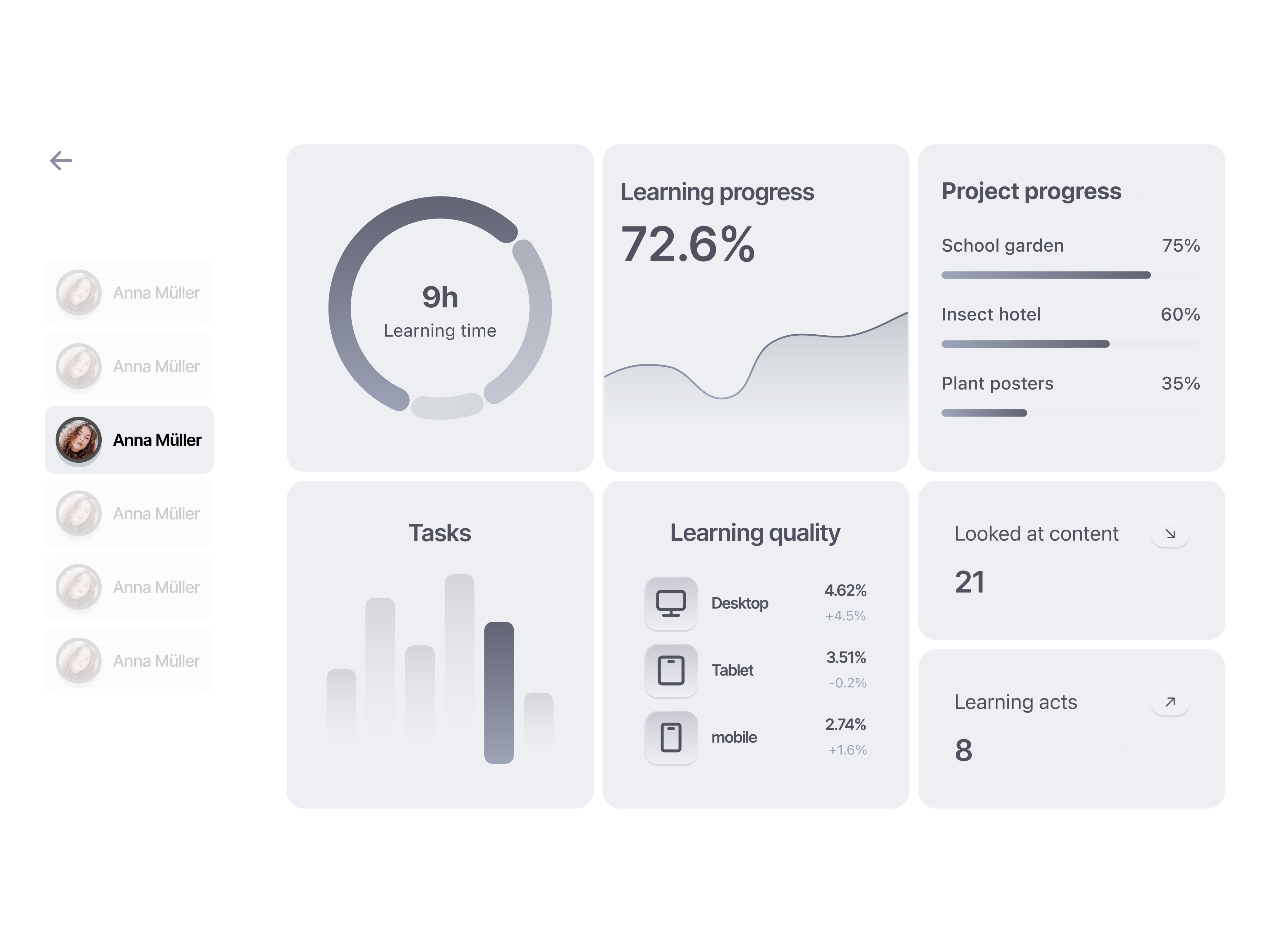
Teachers see everything on one calm dashboard: who is stuck, who is moving forward, and where a mentor should step in—without hovering over every task or interrupting how students work.
Learning happens through real projects. Planning something like a community garden pulls together biology, logistics, and teamwork naturally—because students solve a real problem together, not a chapter in isolation.
When they need guidance, AI tutors can feel like talking to Einstein or Curie: plain language, real back-and-forth, and explanations of how breakthroughs actually happened—so history and science feel human again.
Your Team
Every learner gets their own quiet crew — not one chatbot, but specialized agents that watch different parts of the journey. One tracks what you already know, another finds what excites you, others handle pace, safety, reflection, and context.
They work in the background like a mycorrhiza network: invisible, connected, making sure learning stays personal, fair, and human — so mentors can stay in the room for the rest.
Learned
What we learned? The system was never broken—it was built for compliance, not curiosity. Let technology run the logistics in the background, so teachers can be in the room for what only humans can offer: safety, growth, and real connection.
What Do We Learn When AI Knows Everything?
A speculative learning ecosystem for HfG Schwäbisch Gmünd — asking what school becomes when every answer already lives in your pocket.
AI
We grew up believing school is where you collect answers. Today, every answer already lives in your pocket—and that old deal is falling apart.
Knowing is not the same as growing. We let something else carry the thinking, and our own judgment slowly goes quiet. Classrooms still run on memorize and pass—as if the harder work of figuring things out were never the point.
System
Who stays in the room matters. Teachers become mentors—not the person running drills and tests from the front. Let AI take the repetitive work, like basic testing, so adults have time for what only they can give: social and emotional growth.
No more classic grades. A student's progress is no longer just a stressful number on a paper—we measure real skills and practical results, the kind of growth you can actually see.
Flexible teams instead of fixed classes. We remove traditional classrooms. Students work together in dynamic groups based on their skills and the project—not just their age.
The end of stressful exams. Testing is no longer a single, high-pressure event. The system tracks progress naturally in the background while students learn.
Skills
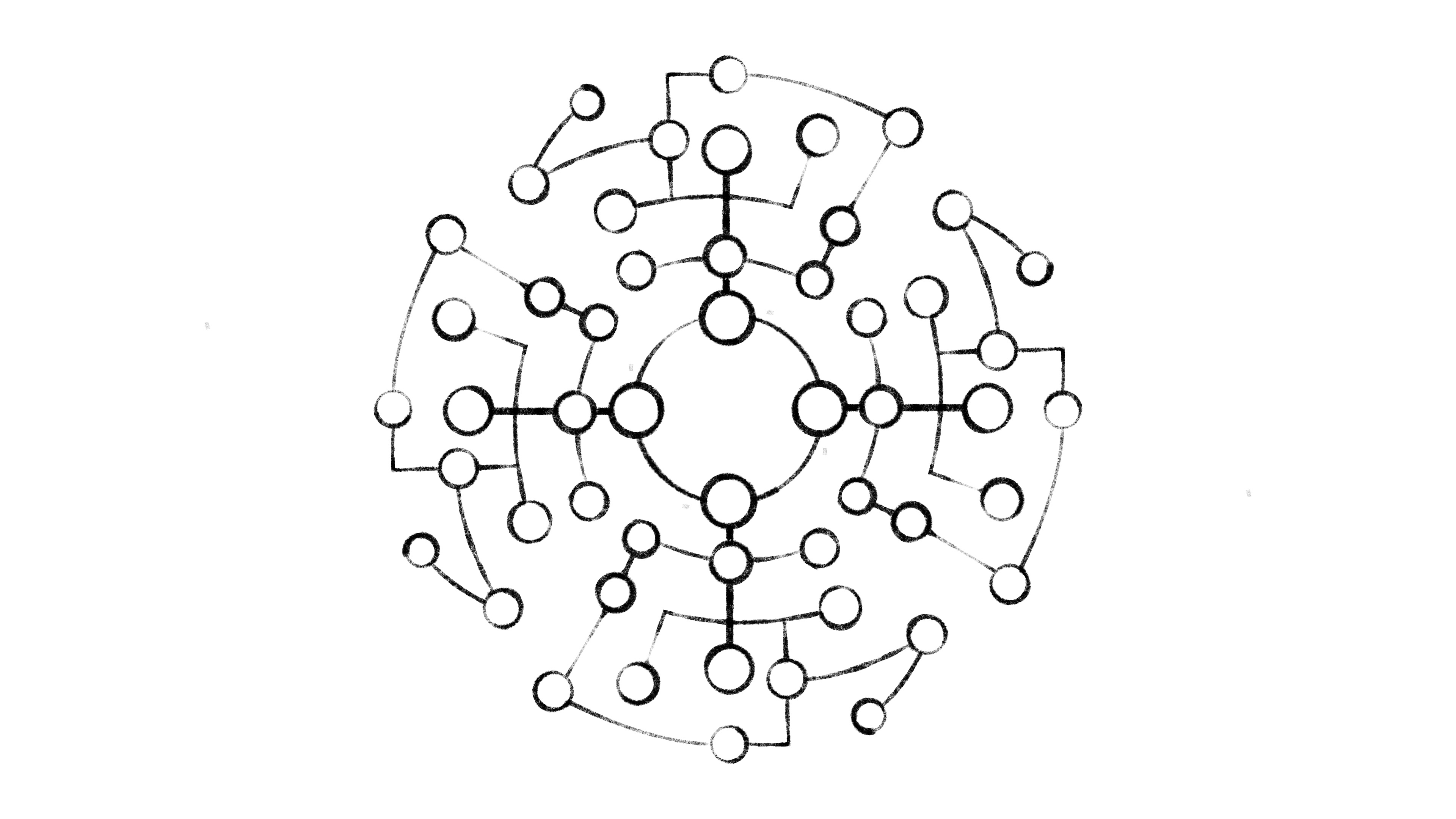
Instead of a single grade on paper, each student builds a personal skill tree—a living picture of what they can do, what they care about, and how they grow over time.
Teachers see everything on one calm dashboard: who is stuck, who is moving forward, and where a mentor should step in—without hovering over every task or interrupting how students work.
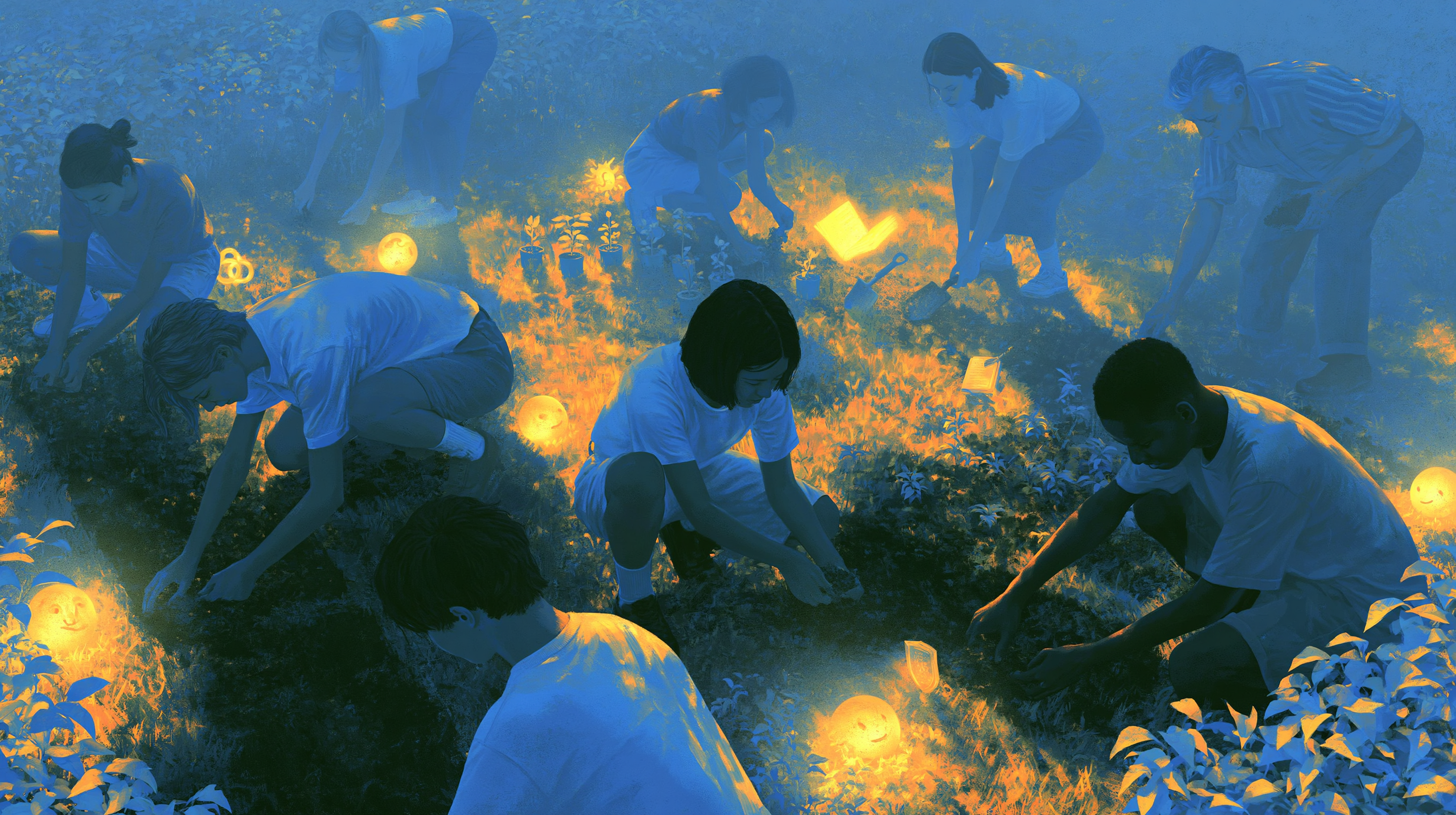
Learning happens through real projects. Planning something like a community garden pulls together biology, logistics, and teamwork naturally—because students solve a real problem together, not a chapter in isolation.
When they need guidance, AI tutors can feel like talking to Einstein or Curie: plain language, real back-and-forth, and explanations of how breakthroughs actually happened—so history and science feel human again.

Your Team
Every learner gets their own quiet crew — not one chatbot, but specialized agents that watch different parts of the journey. One tracks what you already know, another finds what excites you, others handle pace, safety, reflection, and context.
They work in the background like a mycorrhiza network: invisible, connected, making sure learning stays personal, fair, and human — so mentors can stay in the room for the rest.
Learned
What we learned? The system was never broken—it was built for compliance, not curiosity. Let technology run the logistics in the background, so teachers can be in the room for what only humans can offer: safety, growth, and real connection.