A mentor in your pocket, so every workout is one step better
Reps is an iOS app that I designed, built and shipped on my own. It has been on the App Store since April 2026. It works like a mentor that comes to the gym with you. It remembers every session so you do not have to and suggests what to change next based on your own data, so you can focus on training. This page also shows what did not work, with 185 downloads and four paying users so far.
Training without a coach
Most people train without a coach. Nobody tells them what they lifted last week, whether they are really getting stronger, or what to change when they stall. So the next set is a guess, and what feels like hard work can be a plateau with good attendance.
A good coach does three things. They remember everything, plan your next step and adapt when the day goes differently. Few people can afford one. I wanted that coach in everyone's pocket. I am not a trainer, so my job was to decide what the coach does and when it speaks up.
Every feature on this page answers one question. What would a coach do for you at this moment? The page follows one training day, from before you start through the gym to afterwards.
Start from what you already have
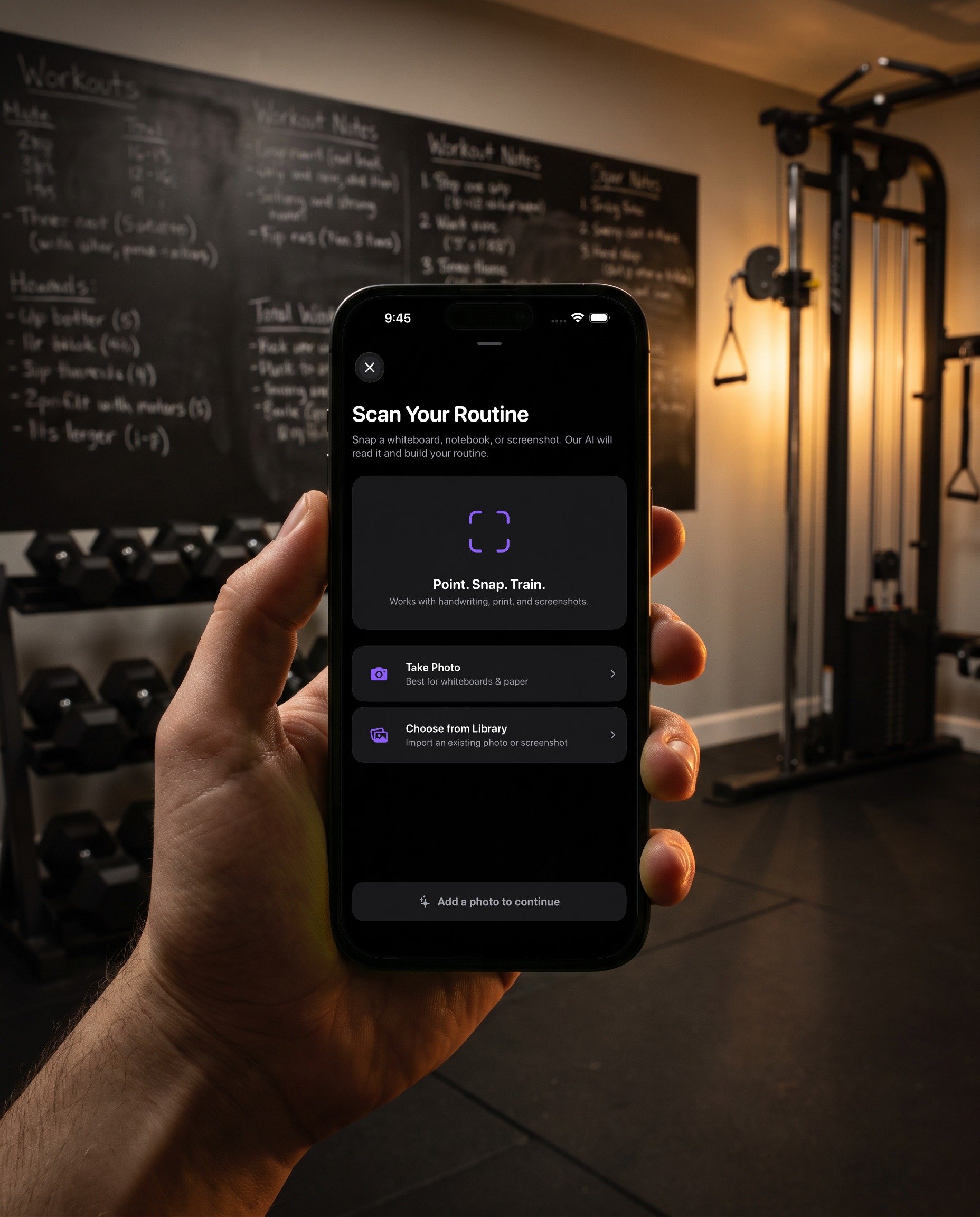
A mentor is useless on day one without data, and typing a routine into a phone is where many people give up. So you can photograph the whiteboard or notebook page you train from, or paste the text, and Reps builds the routine. Since 2.0.1 it also imports Strong and Hevy exports, so months of history come with you and the mentor does not start from zero.
On my roadmap, migration was the best growth lever next to content.
Know what is ready to train
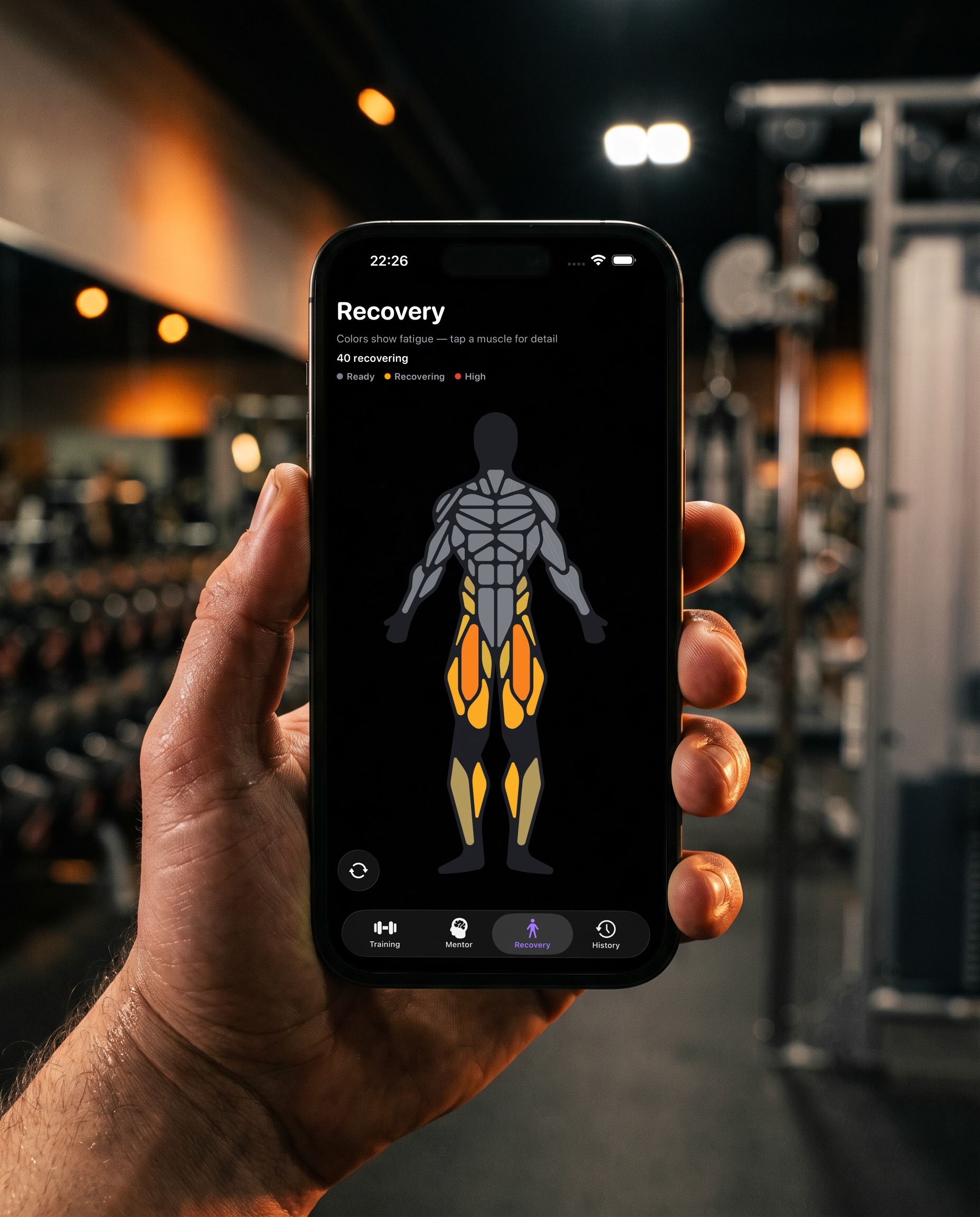
A coach knows when you are not ready. Reps estimates fatigue for each muscle from your recent volume and effort and an exponential recovery curve, and paints it on a body map with three states, ready, recovering and high. Before you start, it warns you if a target muscle has not recovered yet and offers a lighter start. With sleep data from Apple Health it can scale the session as well.
The map is what reviewers mention most. It shows beginners which regions they still have to train.
Only 45 minutes today?
Plans assume a full hour. Real days do not. Reps measures how long a routine really takes you, the median of your past sessions, so before you start you can pick full session, 45 or 30 minutes.
The mentor trims the workout for this session only. Compound lifts stay, isolation work goes first, and it tries to keep the minimum sets each muscle needs. A live preview shows what is left, and your saved routine stays untouched.
Afterwards the session rating counts the time you chose, so a short workout is not marked down for being short. A short session that counts beats a skipped one.
Your next set, already worked out
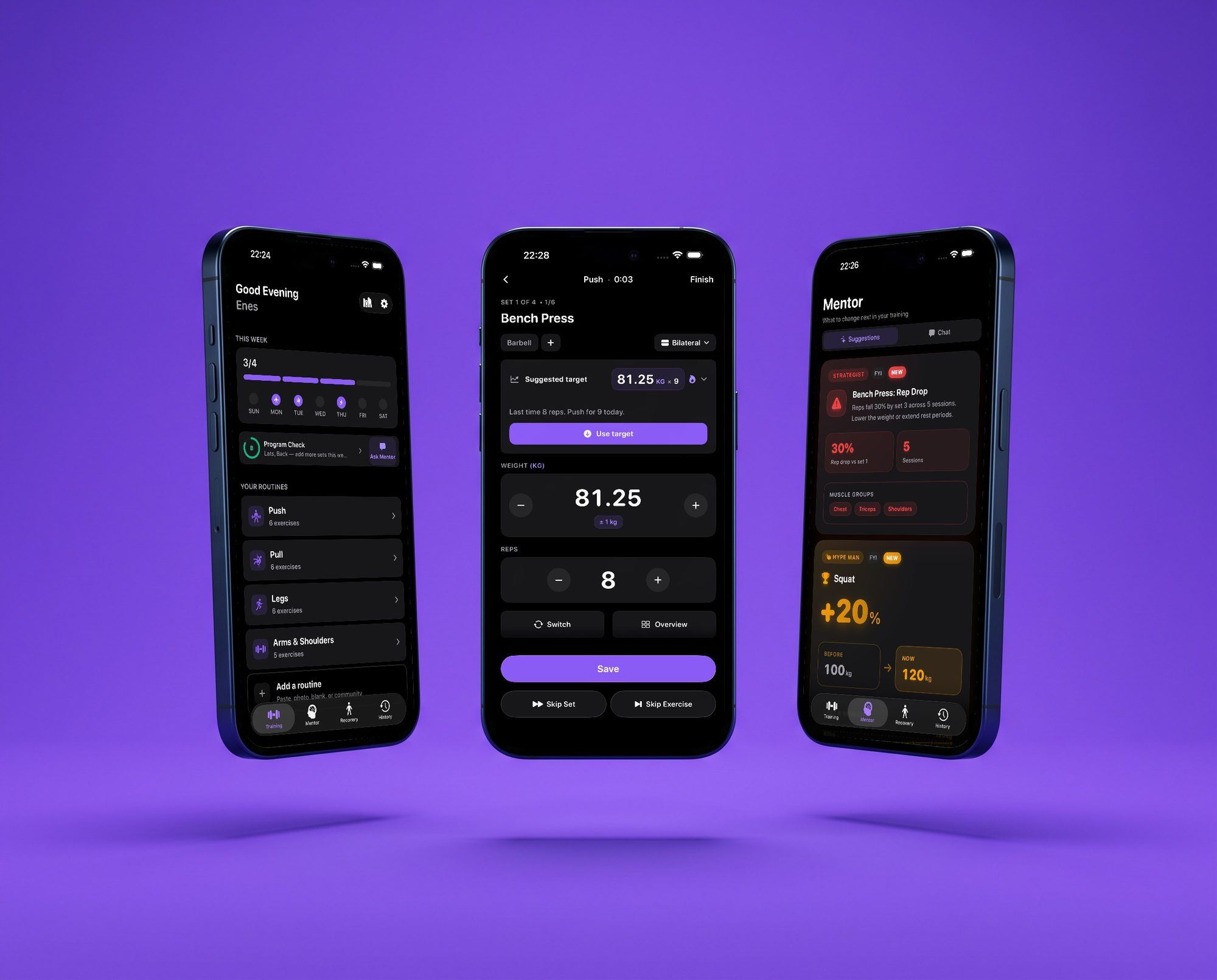
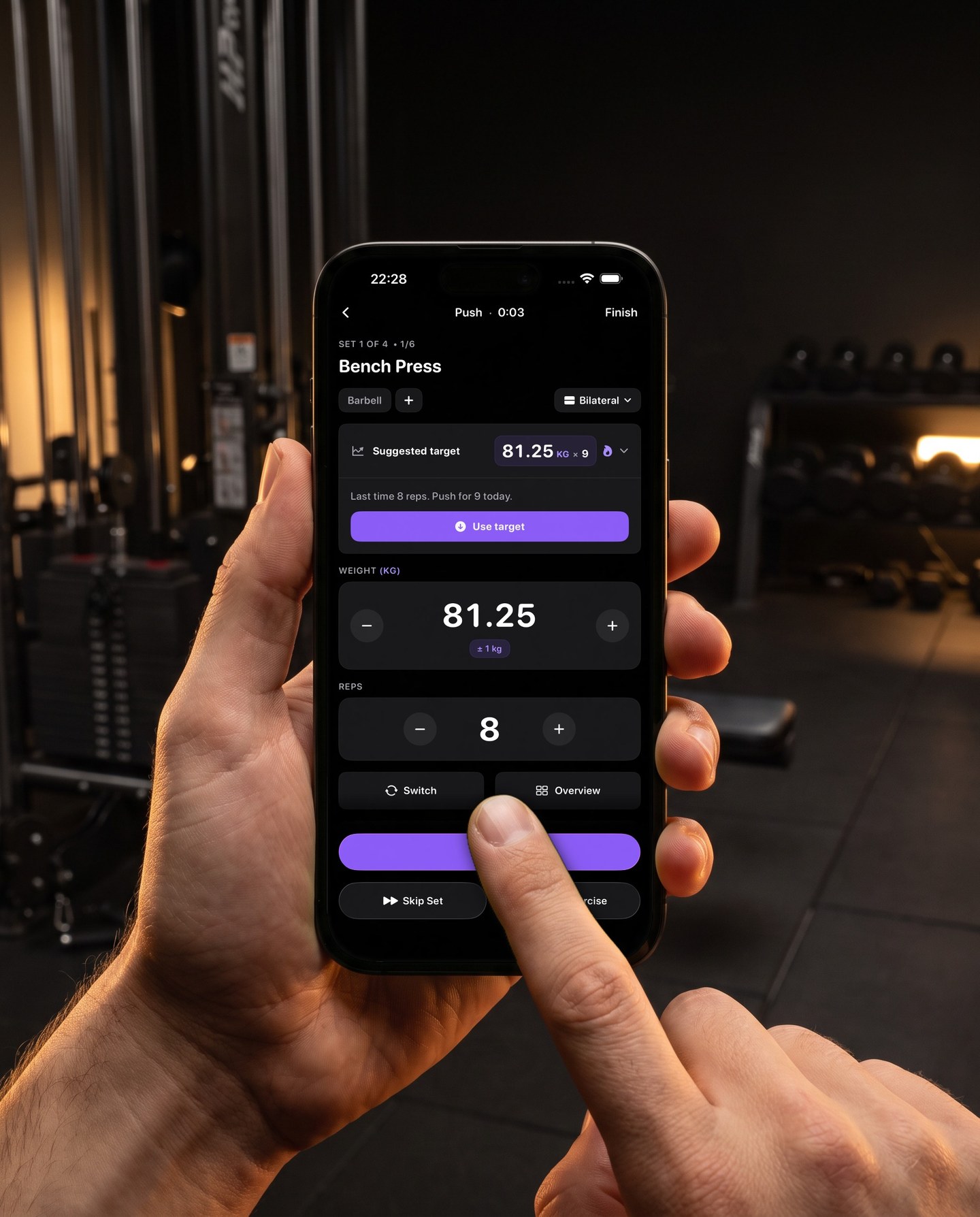
A coach would not ask what you lifted last week. Reps shows it before every set, with a target for today. The target follows plain rules on your own history. A first set of twelve reps or more earns more weight, six to eleven reps ask for one more rep, and four reps or fewer, or a pain tag, take weight off. It only compares sets on the same equipment, because eighty kilos on a cable are not eighty on a Smith machine.
In April the target was a card you could read and close. My July roadmap put it bluntly. A suggestion without an action stays invisible. Since version 2.0.1 it is one tap, and after the set Reps shows whether you hit it.
The bench is taken
In a busy gym the plan breaks the moment someone sits on your bench. Switch Exercise shows the three best alternatives that train the same muscle in a similar way, so you do not have to improvise.
The same idea runs through the whole session. From the overview you can jump to any exercise, push one to the end, add a set, or drop an exercise without it counting as skipped. The plan bends instead of breaking.
A rest timer you can forget about
Resting too short or too long changes the next set, and watching the clock is not your job. The timer starts when you save a set, with a length that fits the muscle. That is two and a half minutes after big lifts and ninety seconds after small ones. You can nudge it by fifteen seconds or pick a short or long preset for the day.
It keeps running in the Dynamic Island and on the lock screen, so the phone goes back in your pocket and still tells you when to go.
One tap to say how the set felt
The mentor only sees what you type in. During the rest you can tell it more. Rate how the set went, tag it with something like “felt strong”, “too heavy” or “joint pain”, or add an effort rating and a note. It takes a second, and you are resting anyway.
That answer changes what happens next. A pain or sloppy form tag brings the next target down and says why, and it stays in your history for the mentor to read.
Every workout, one step better
After the last set you see what you did, with duration, volume, sets and a quality score from 0 to 100. It weighs volume against the plan, effort, rest, sleep and consistency, and it counts the time budget you chose. A short verdict from the mentor names your best move and one focus for next time.
Over the weeks the history shows whether it moved you forward, and a weekly goal with a streak keeps the rhythm. That is the point of a mentor. Not the advice, but the step you took. Next time the target starts where this session ended.
It remembers every session
A coach never forgets what you did. Memory does. It rounds numbers, and a switch from one machine to another can turn a plateau into progress or the other way round. So Reps logs every set with weight, reps, equipment and how the set felt, and keeps it all in one history.
It also counts differently. Ten easy sets look like effort but are not, so the history separates hard sets from filler and shows them per muscle group, week by week. Busy is not the same as effective.
That record is what everything else is built on. The mentor can only advise you on what it has seen.
A mentor that sees the weeks, not just the set
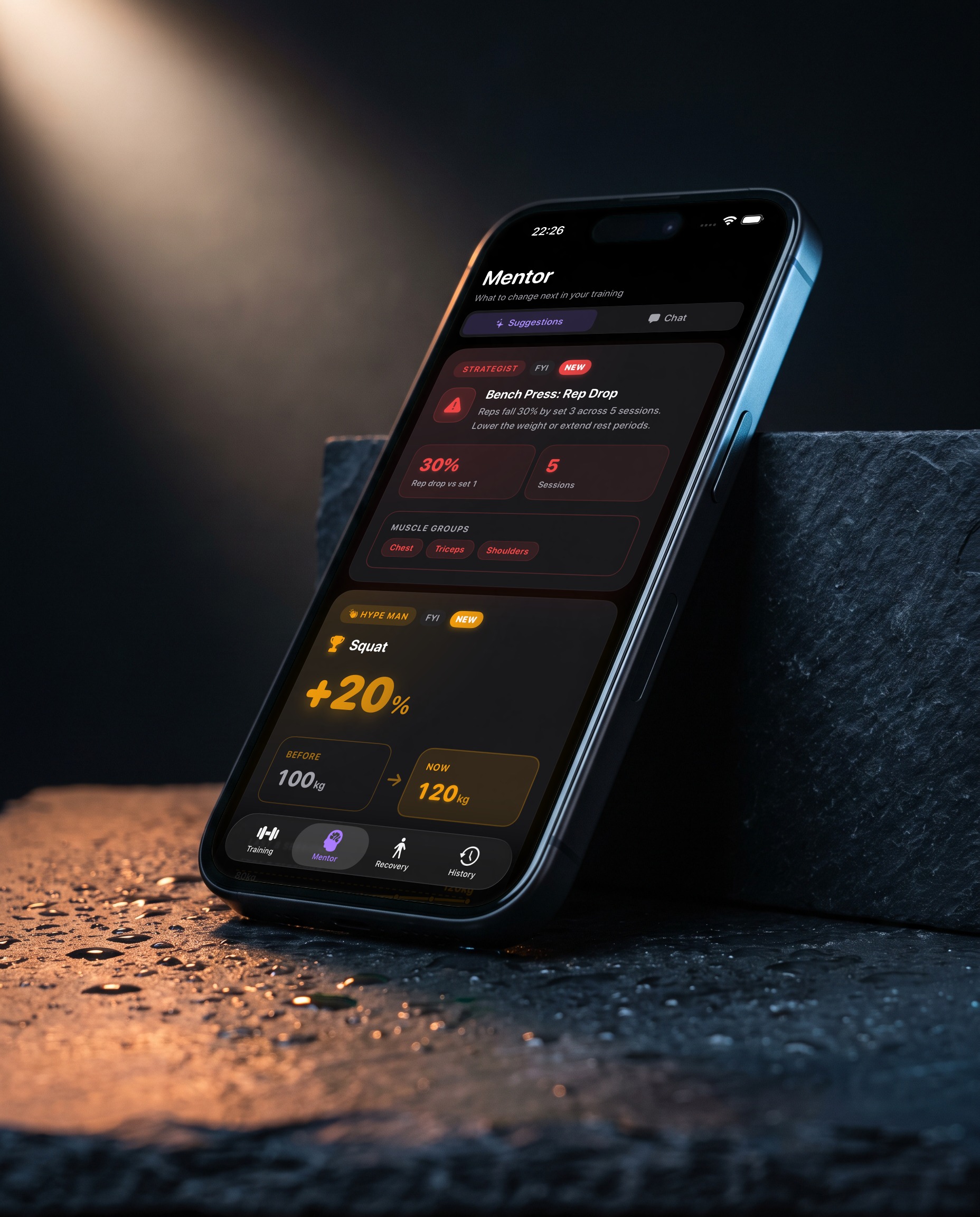
Over the weeks the mentor reads your logs and points out what you would miss on your own. Reps fall by a quarter or more from the second set in four sessions, a lift has stalled, a muscle group is behind this week, or you were away for ten days and should ease back in. Each card names one concrete step, like lowering the weight, resting longer, adding sets or changing the exercise.
Four voices share the job. A Strategist watches weekly volume, an Analyst watches trends, a Hype Man celebrates wins and a BioHacker looks after recovery. Praise is rationed on purpose. The Hype Man shows a gain of ten percent or more at most once a week, so it still means something. In the Pro version you can also ask the mentor in chat, and it can reorder the exercises of a routine for you.
Built and shipped alone
Reps is a solo project. I did the product and interface design, built the SwiftUI app together with AI coding assistants, and set up accounts and sync, payments, analytics and the release pipeline. I also wrote the App Store pages in five languages and ran the marketing.
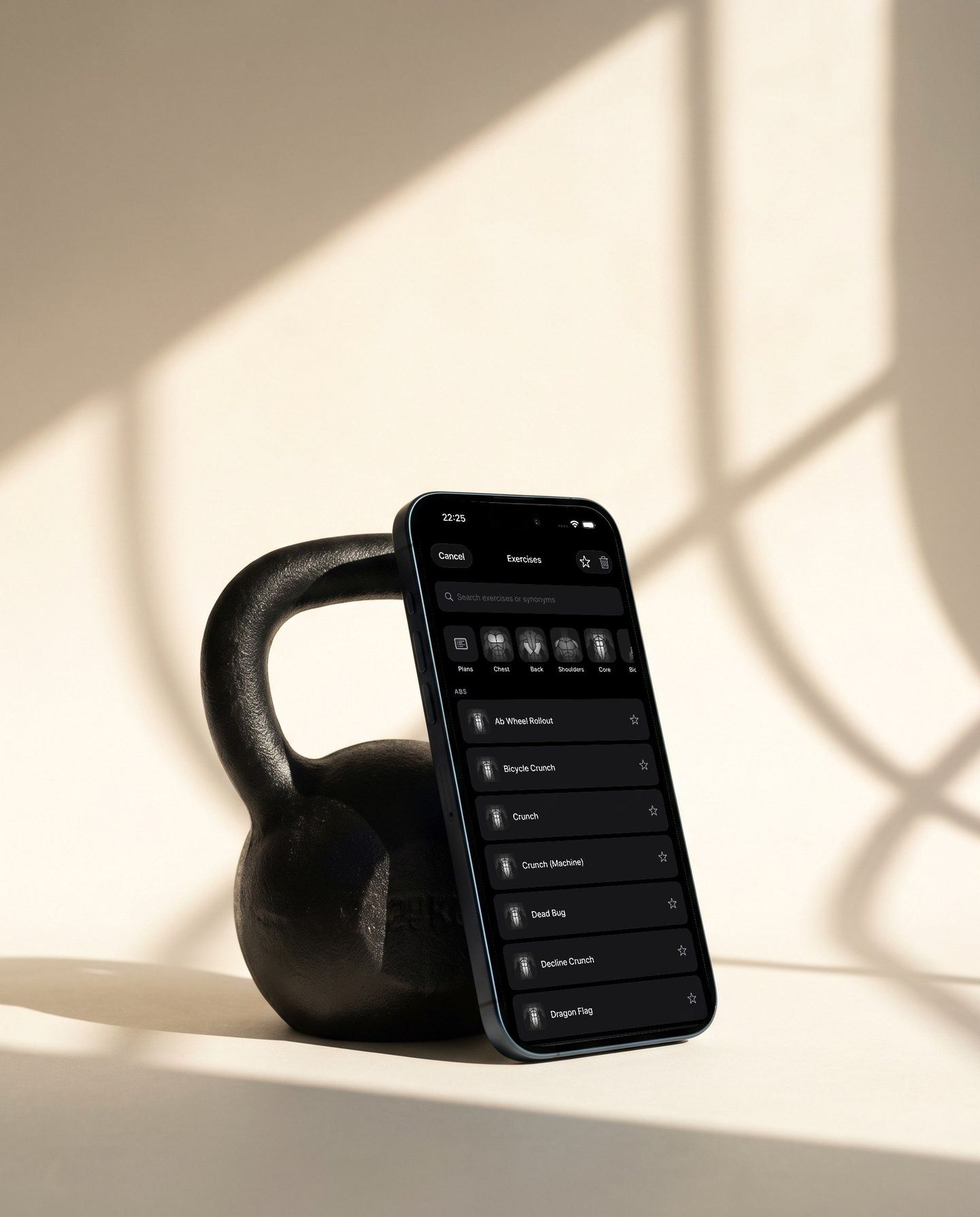
Apple rejected version 1.0 six times before it went live on 2 April 2026. Twelve more versions followed until 13 September, with an Apple Watch app, widgets, a Live Activity for the rest timer and a library of more than 200 exercises with muscle maps and videos.
By July the app had grown wide, with friends, a routine marketplace and achievements. I wrote one rule above the next roadmap, which was depth over breadth. The first thing it paid for was trust. A mentor that forgets you is useless, and after a reinstall your routines and logs now come back.
What users actually said
Reps has four written reviews, all five stars, all from Germany. Three of them praise the same thing, how clear the app is for beginners, mostly the muscle map. One reviewer called it a notebook that stays with you the whole time. That is the closest anyone came to the idea behind this page.
None of them mentions the feature I built the first pitch around, the last weight on the same machine. The only wish was a short guide. I added a walkthrough a month later, but it plays once and cannot be found again after you skip it. That is still open. There has been no new review since 25 May, through seven more releases.
Three of the four reviews arrived within two days, two from the same person, possibly from people close to me. Four reviews are a hint, not evidence.
The numbers, honestly
From January to the middle of October 2026 the App Store showed Reps 20,864 times. 784 people opened the page, 185 downloaded the app, and four pay for it today.
I spent €167 on Apple Ads for 67 installs, about €2.50 each. Without knowing what a user is worth, I stopped there. Over the summer I ran a faceless TikTok and Instagram account that grew to about 1,300 followers. Posts about which lift to do first reached around 1,100 views. Downloads did not follow.
Analytics only counts people who agree to it, so read these as lower bounds. I saw 1,709 sessions in the period and about seven active devices in the last 30 days. Building was never the bottleneck. Getting the right people to understand why Reps exists was.
What I would do differently
My own store page opens with “Train like a Pro”, and the app name leads with AI. That is the feature list talking, not the reason Reps exists. My first pitch was the last weight on the same machine, and not one review mentions it. They talk about clarity, the muscle map and the analysis. People were describing a mentor.
In July I wrote the reason down in one sentence. Reps shows whether you are really making progress, not just that you went to the gym. It came after a dozen releases. It should have come before the first.
Next time I would measure from day one instead of from September, find a way to reach the people who pay, and test the store page before building the next feature. Growth is parked for now and the app stays live. What changed is how I decide. A feature has to make that one sentence more true, or it waits.
A mentor in your pocket, so every workout is one step better
Reps is an iOS app that I designed, built and shipped on my own. It has been on the App Store since April 2026. It works like a mentor that comes to the gym with you. It remembers every session so you do not have to and suggests what to change next based on your own data, so you can focus on training. This page also shows what did not work, with 185 downloads and four paying users so far.
Training without a coach
Most people train without a coach, so the next set is a guess. A coach remembers everything, plans your next step and adapts when the day goes differently. I wanted that coach in everyone's pocket. I am not a trainer, so my job was to decide what it does and when it speaks up. Every feature answers one question. What would a coach do for you at this moment? The page follows one training day, from before you start to afterwards.

Start from what you already have
Photograph the whiteboard or notebook page you train from, or paste the text, and Reps builds the routine. Strong and Hevy exports import too, so the mentor does not start from zero.
Know what is ready to train
Reps estimates fatigue per muscle from your recent volume and effort and paints it on a body map. Before you start, it warns you if a target muscle has not recovered and offers a lighter start. Reviewers mention the map most.
Only 45 minutes today?
Plans assume a full hour. Before you start you pick full session, 45 or 30 minutes. Reps knows how long the routine takes you, keeps the compound lifts and the minimum sets each muscle needs, and drops isolation work first. A short session that counts beats a skipped one.

Your next set, already worked out
Before every set Reps shows what you lifted last time and a target for today, based on plain rules on your own history. Since 2.0.1 you take it with one tap, and Reps shows whether you hit it.

The bench is taken
When someone sits on your bench, Switch Exercise suggests the three best alternatives for the same muscle. You can also jump to any exercise, push one to the end or drop one without it counting as skipped.

A rest timer you can forget about
The timer starts when you save a set, with a length that fits the muscle. That is two and a half minutes after big lifts and ninety seconds after small ones. It keeps running in the Dynamic Island and on the lock screen, so the phone can go back in your pocket.

One tap to say how the set felt
The mentor only sees what you type in. During the rest you can tag how the set felt, like “too heavy” or “joint pain”. That brings the next target down and says why, and it stays in your history for the mentor.

Every workout, one step better
After the last set you see duration, volume and a quality score that weighs volume, effort, rest, sleep and consistency. A short verdict names your best move and one focus for next time. Next time the target starts where this session ended.


It remembers every session
Memory rounds numbers. Reps logs every set with weight, reps, equipment and how it felt. It separates hard sets from filler, because busy is not the same as effective. The mentor can only advise you on what it has seen.

A mentor that sees the weeks, not just the set
Over the weeks the mentor reads your logs and points out what you would miss. Reps fall by the third set, a lift has stalled, a muscle group is behind this week. Each card names one concrete next step. Praise is rationed to at most one big win per week.
Built and shipped alone
I designed Reps, built it with AI coding assistants, and ran releases and marketing myself. Apple rejected 1.0 six times. Twelve more versions followed by September, with Watch app, widgets and 200+ exercises. In July I set one rule, depth over breadth.
What users actually said
Four reviews, all five stars, all from Germany. Three praise how clear the app is for beginners, mostly the muscle map. One called it a notebook that stays with you the whole time. None mentions the feature I pitched, and none is newer than 25 May. A hint, not evidence.
The numbers, honestly
From January to the middle of October 2026 the store showed Reps 20,864 times, 784 people opened the page, 185 downloaded it and four pay for it. €167 on Apple Ads bought 67 installs. About 1,300 social followers did not turn into downloads. About seven active devices in the last 30 days.
- 3.8% Of 20,864 store impressions opened the page
- 24% Of 784 page visitors downloaded the app
- 2.2% Of 185 downloads became a paying subscription
What I would do differently
The store page leads with features, not with the reason Reps exists. The reviews already described it as a mentor, not a logger. I wrote that down after a dozen releases. Next time it comes first, along with measuring from day one.